PICTURE TALES – THE STORY WITHIN YOU

Exhibition of Contemporary Silent Book Illustrators

2026.09.09. – 2026.11.07.

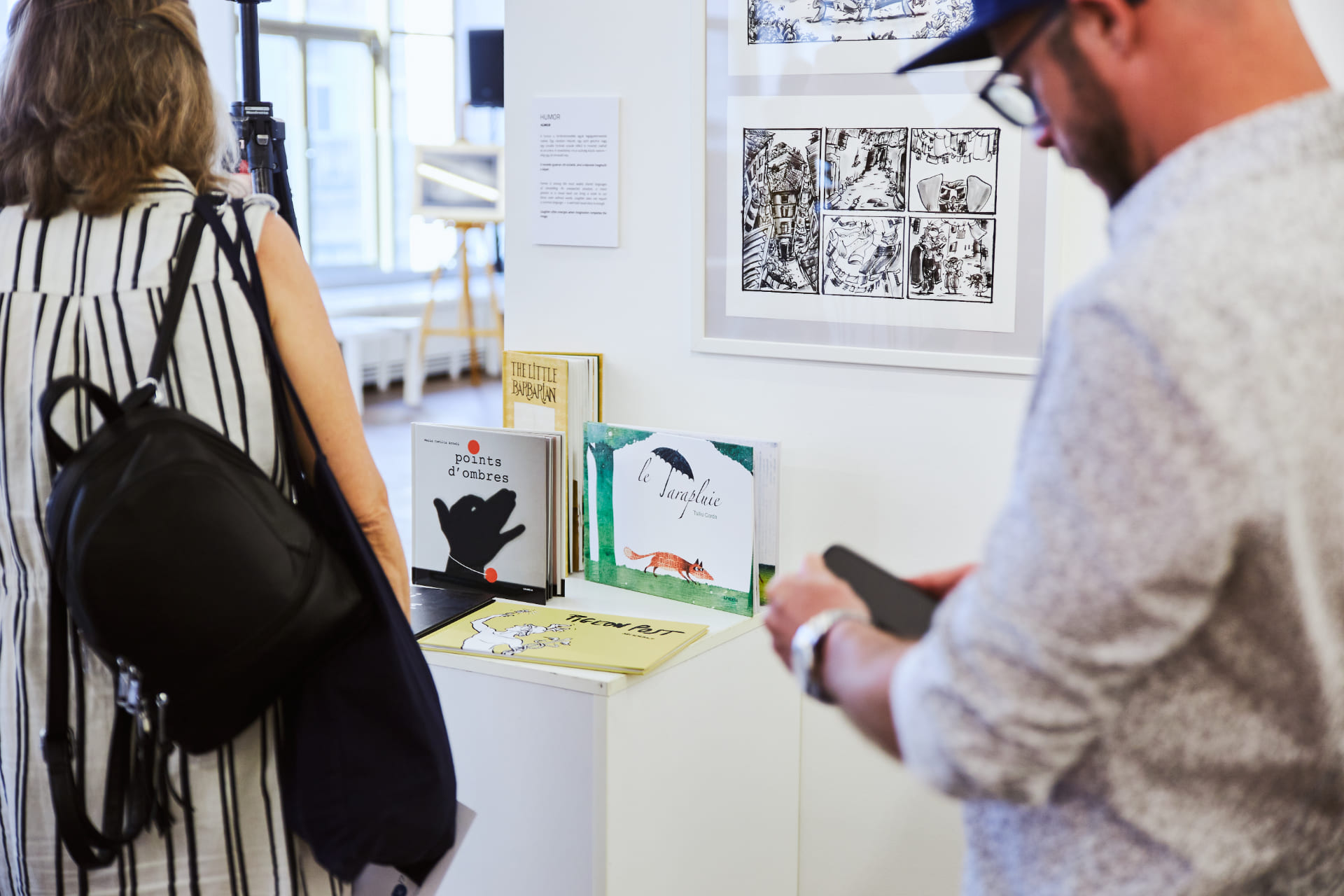
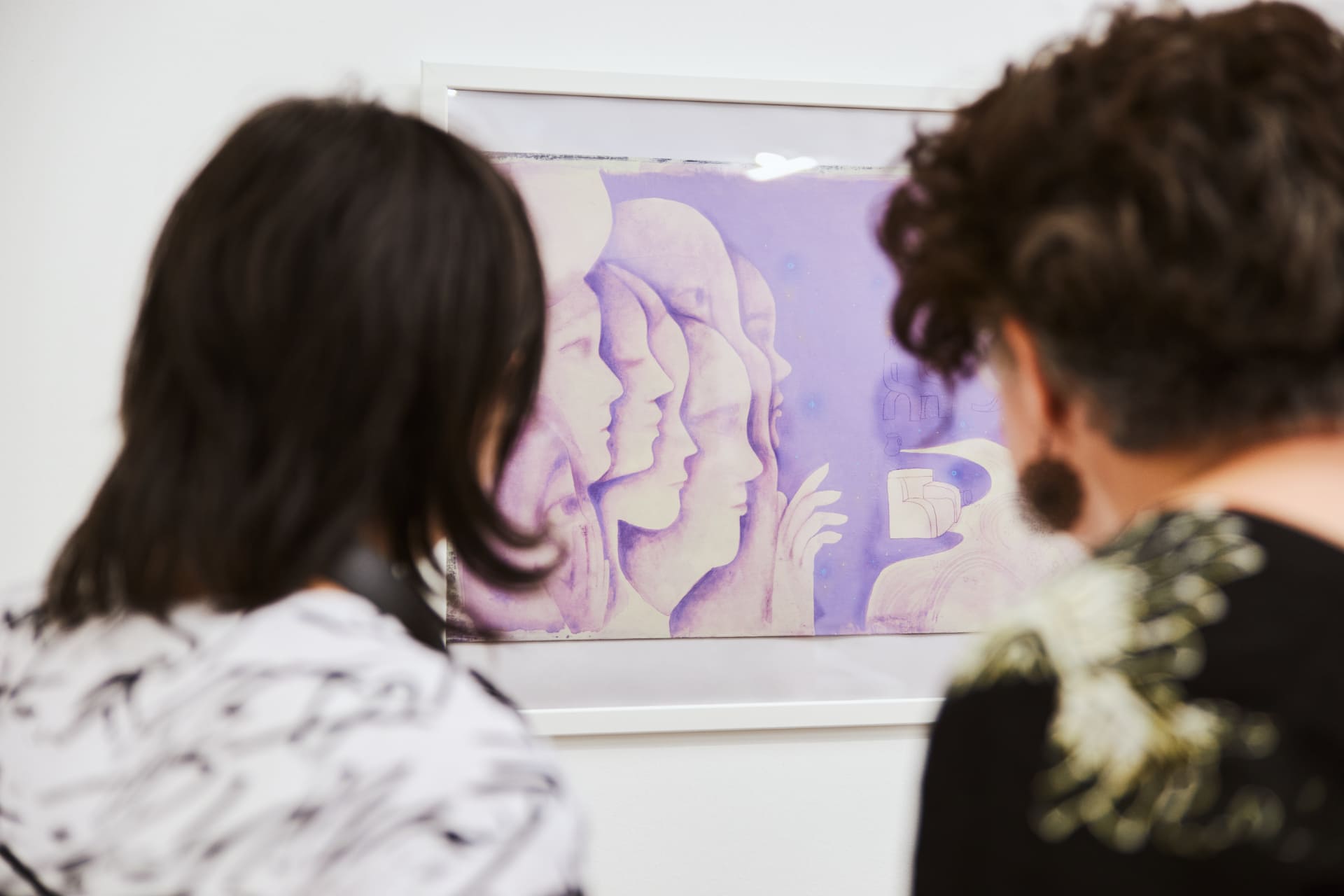
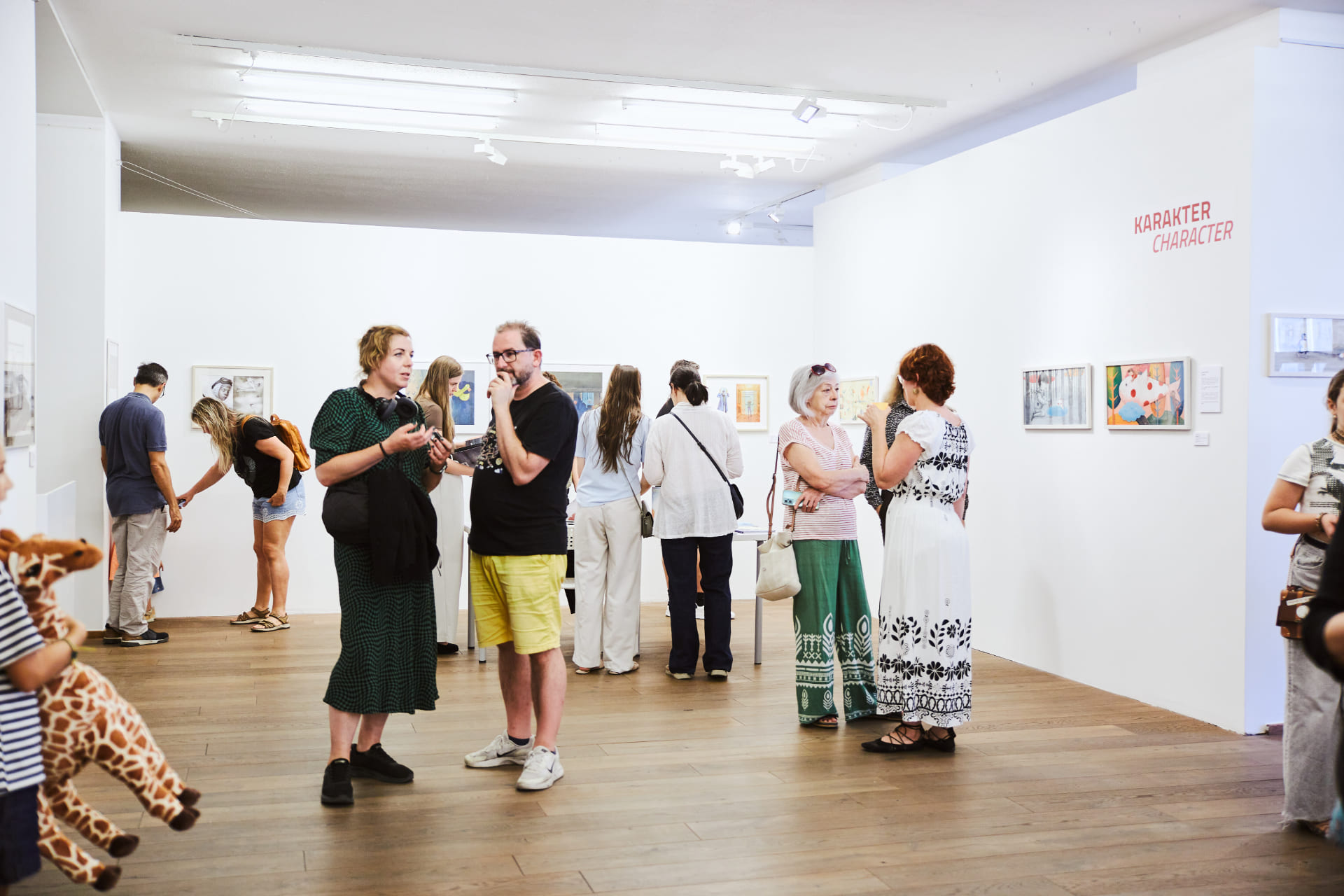
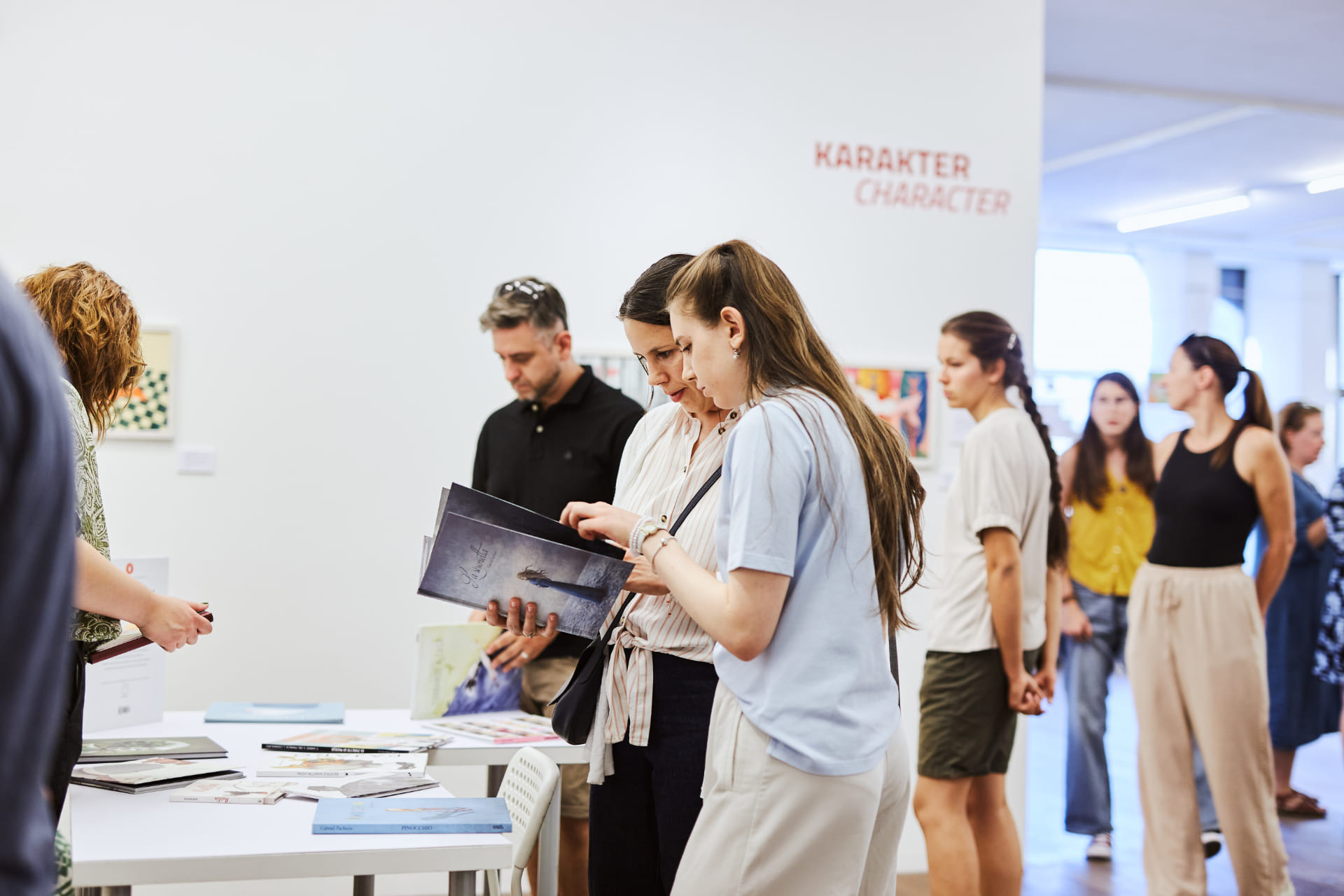
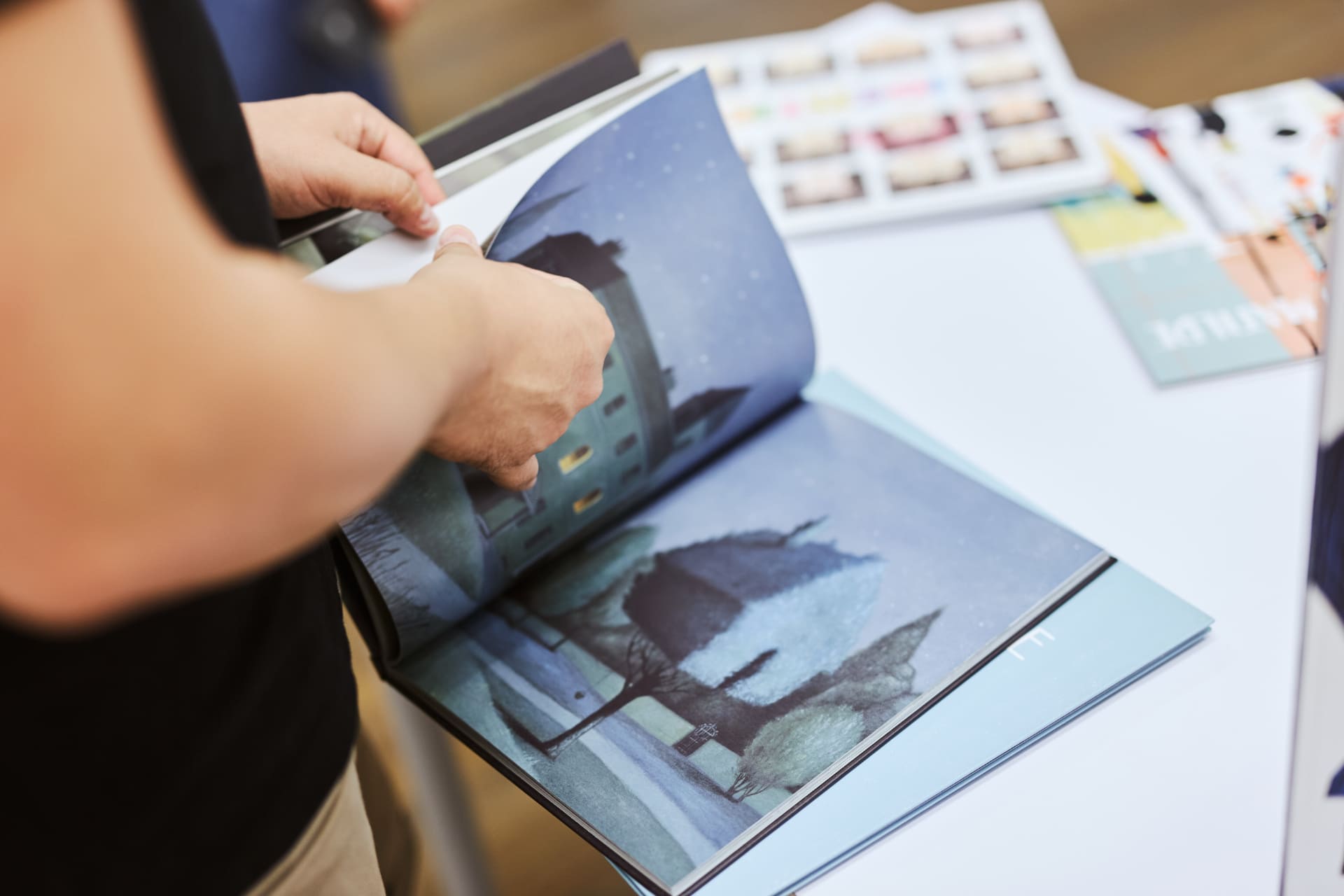
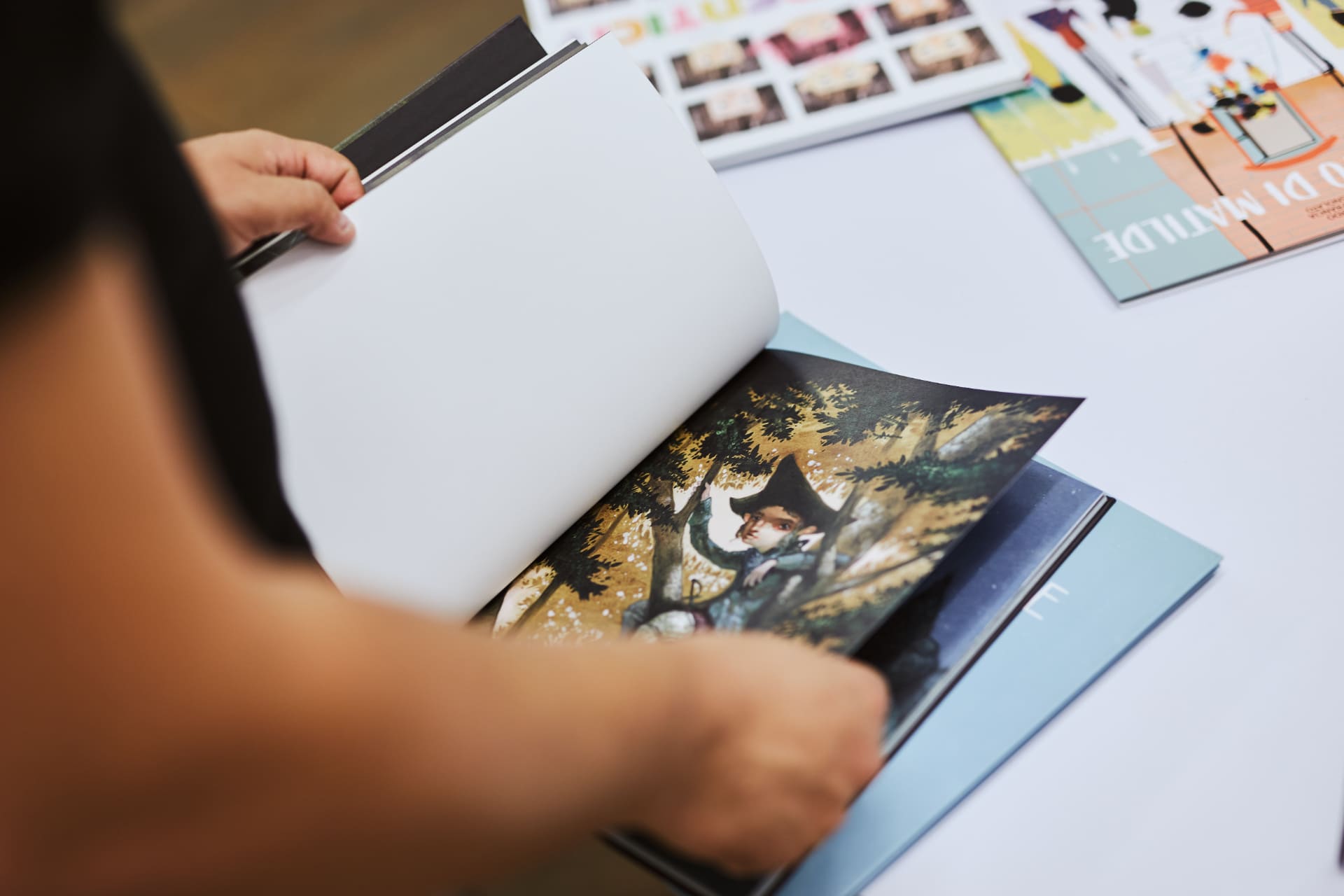
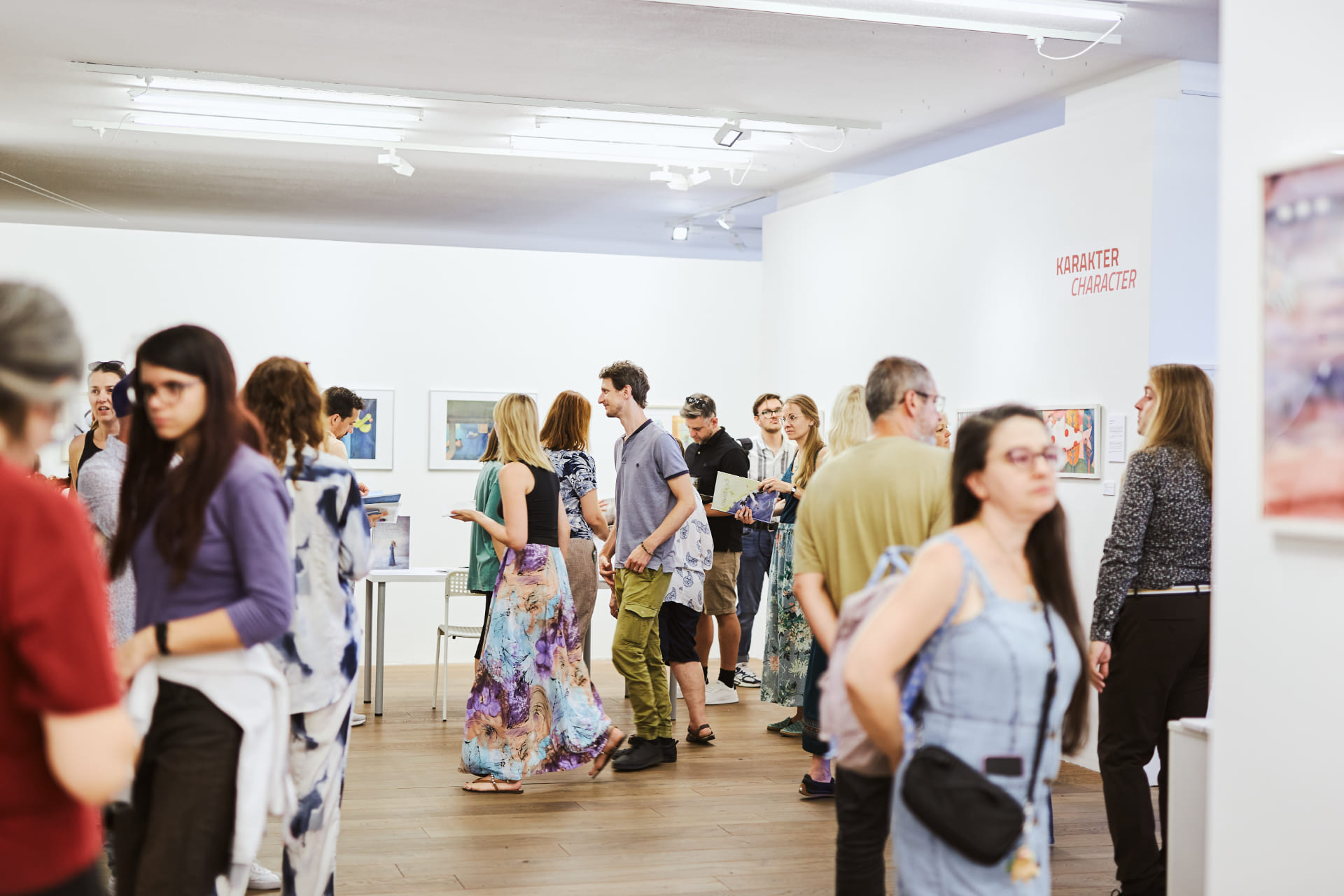
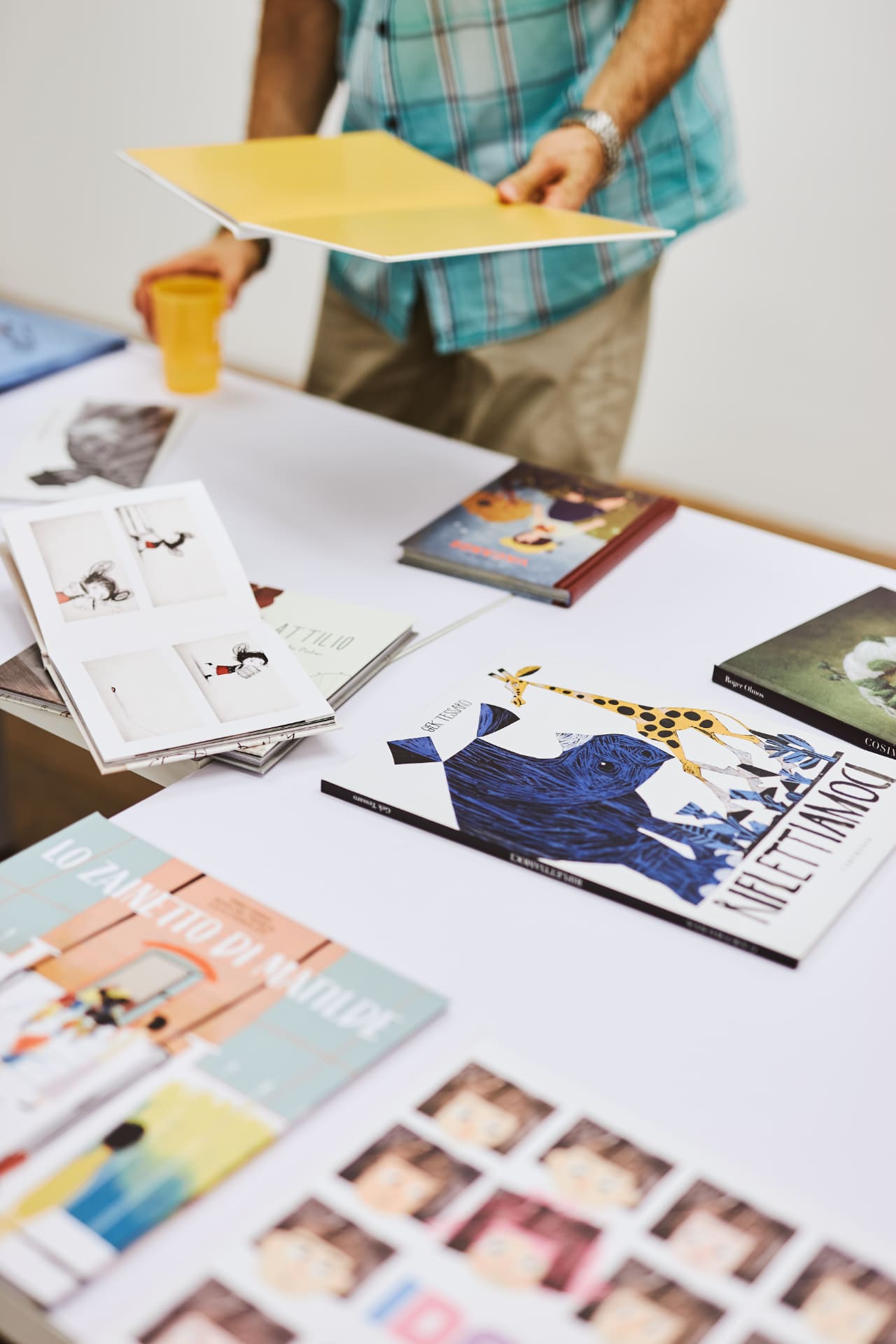
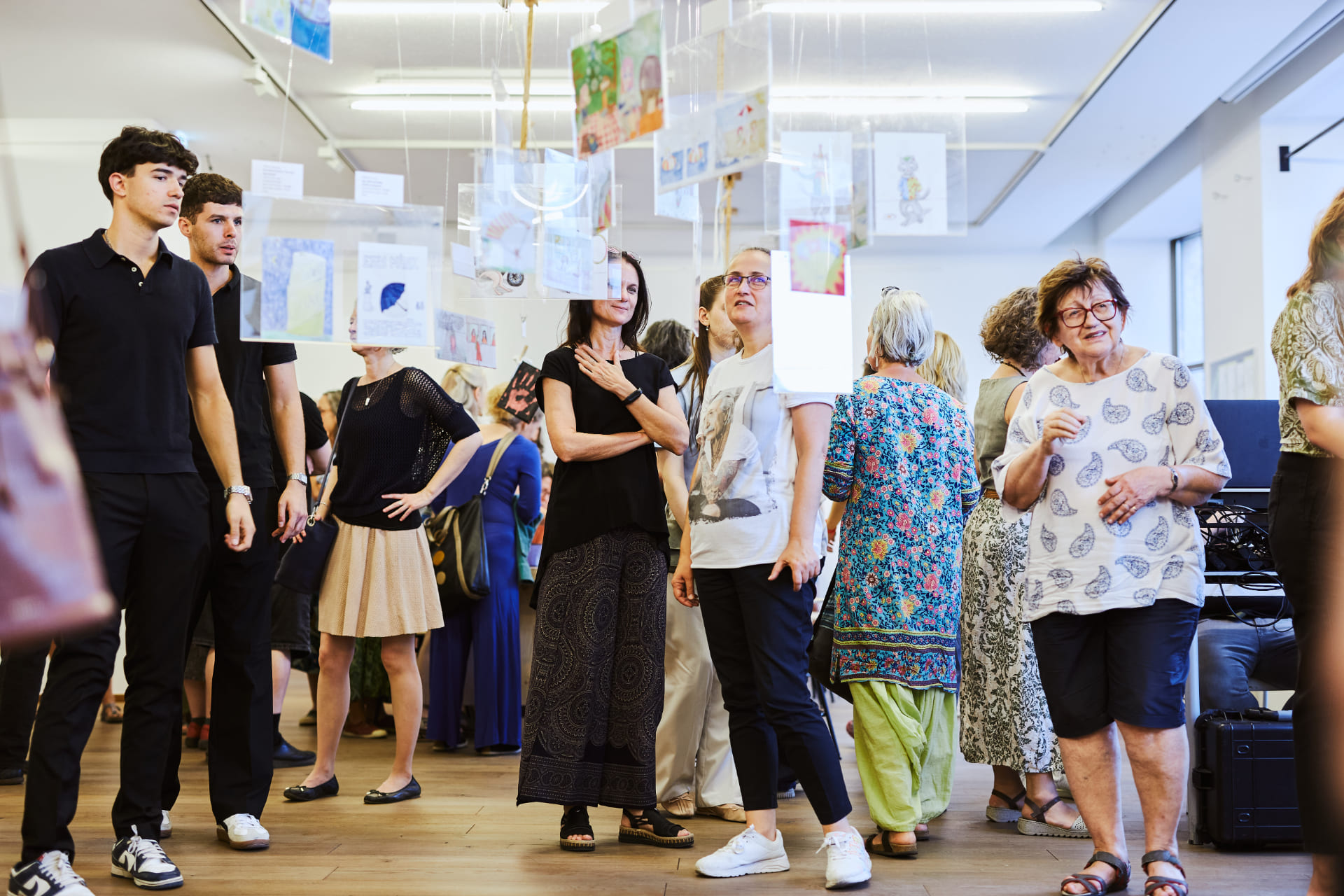
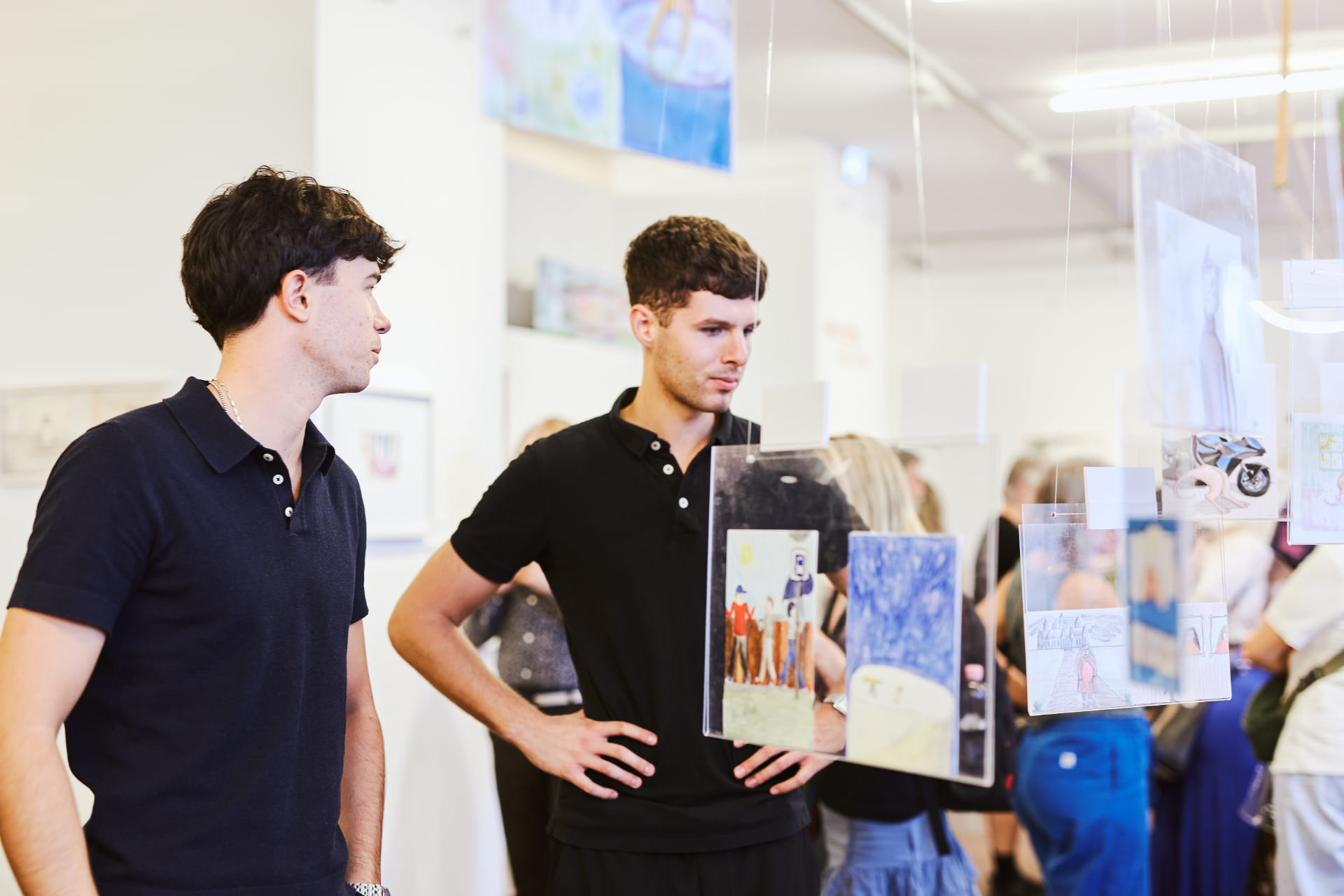
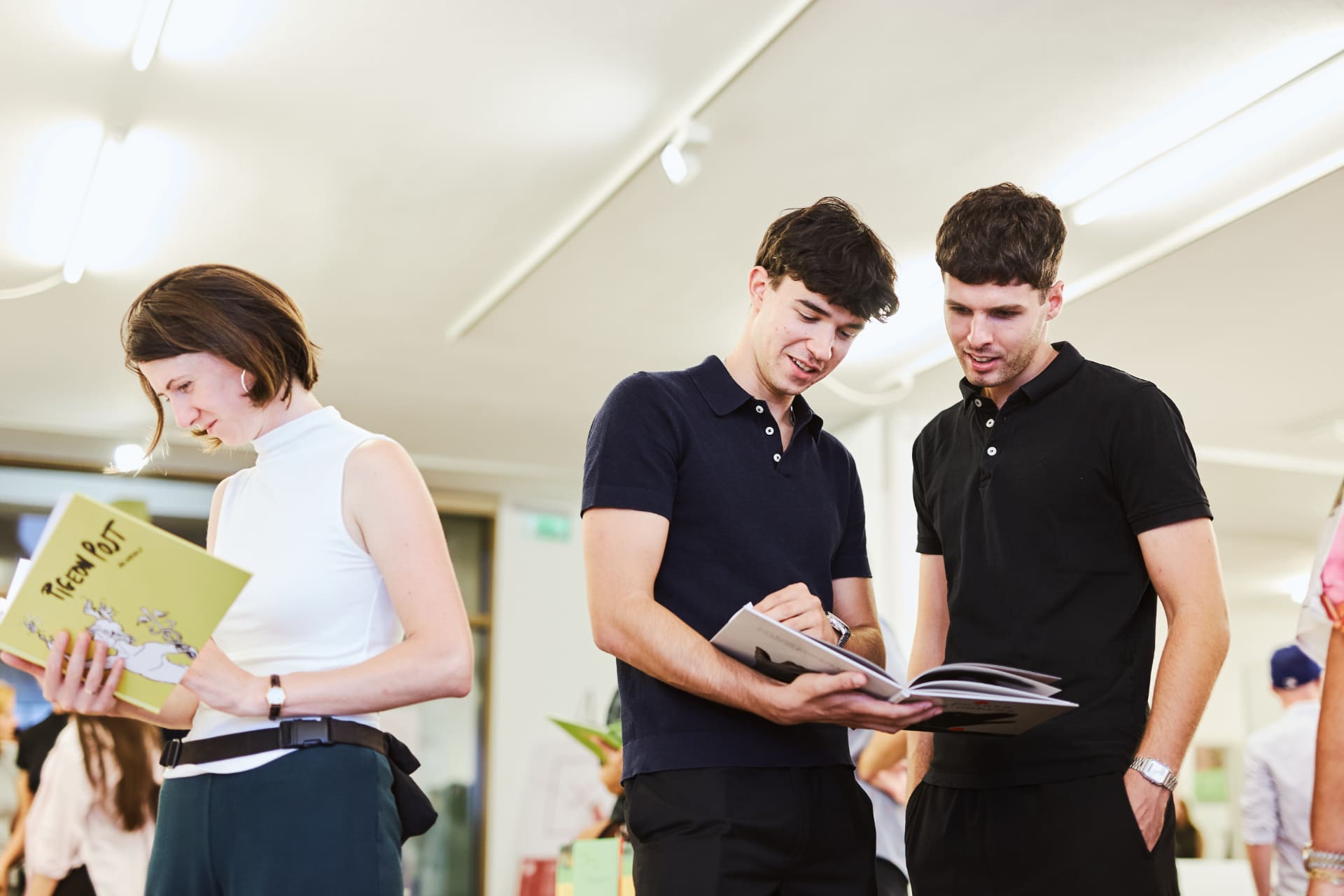
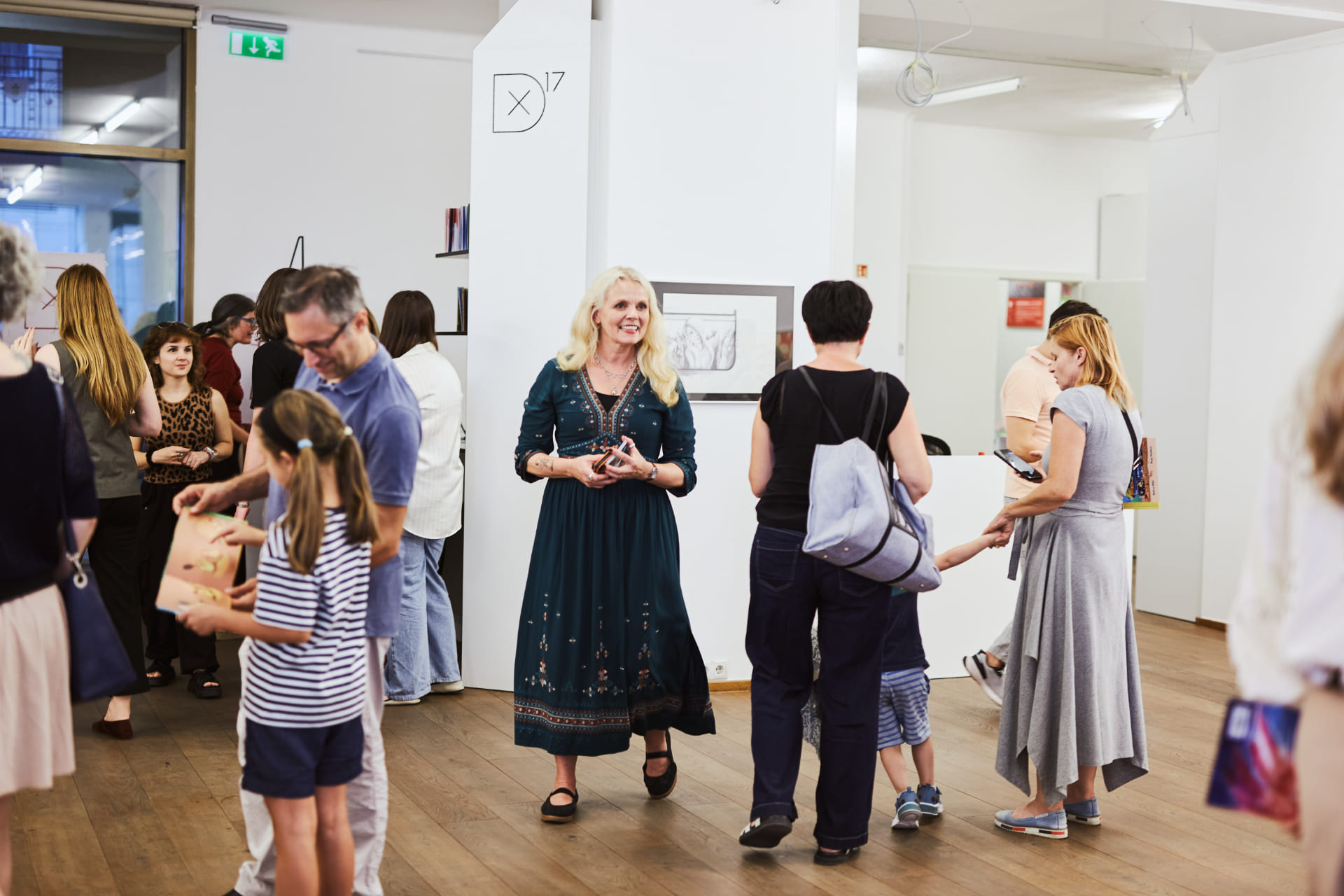
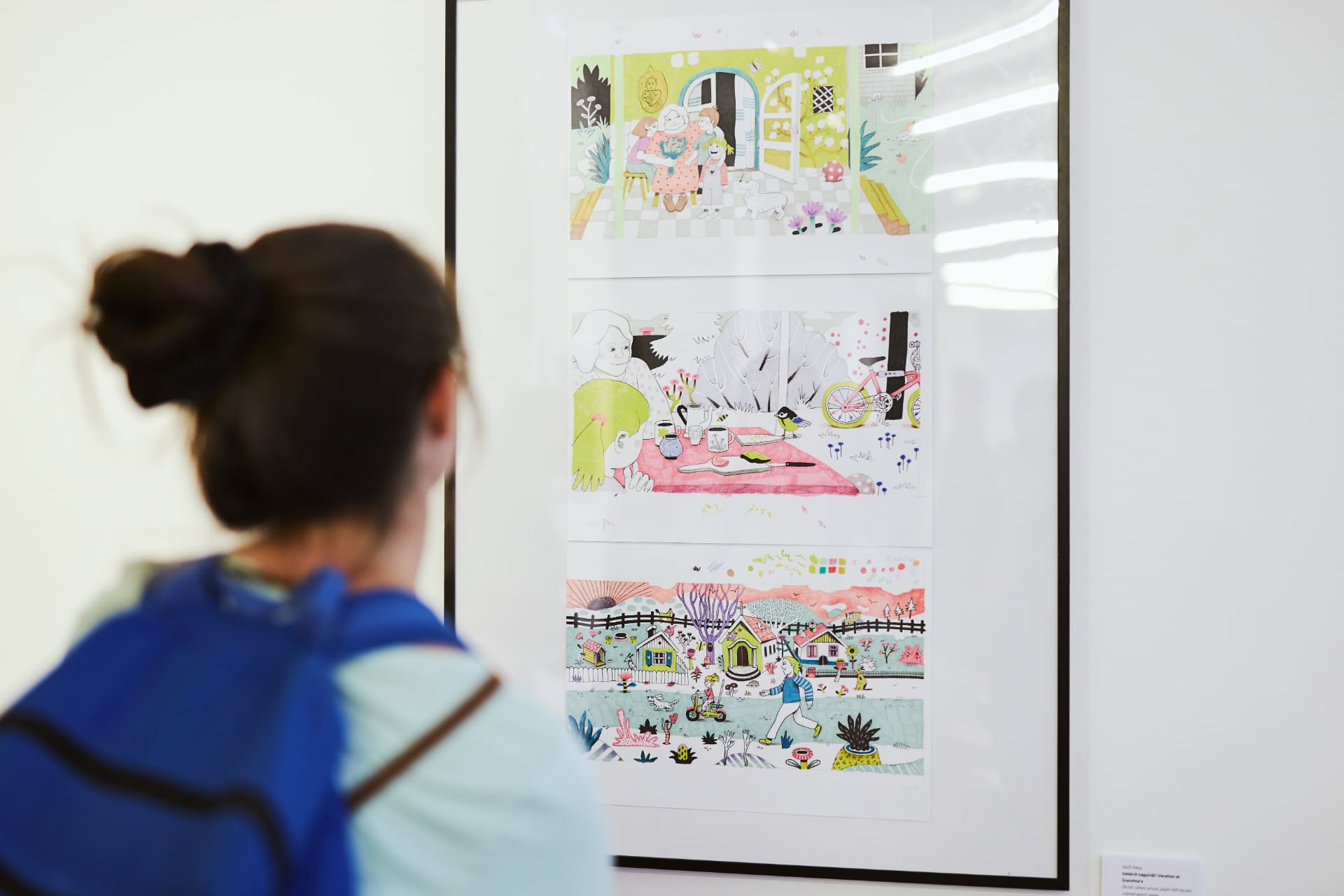
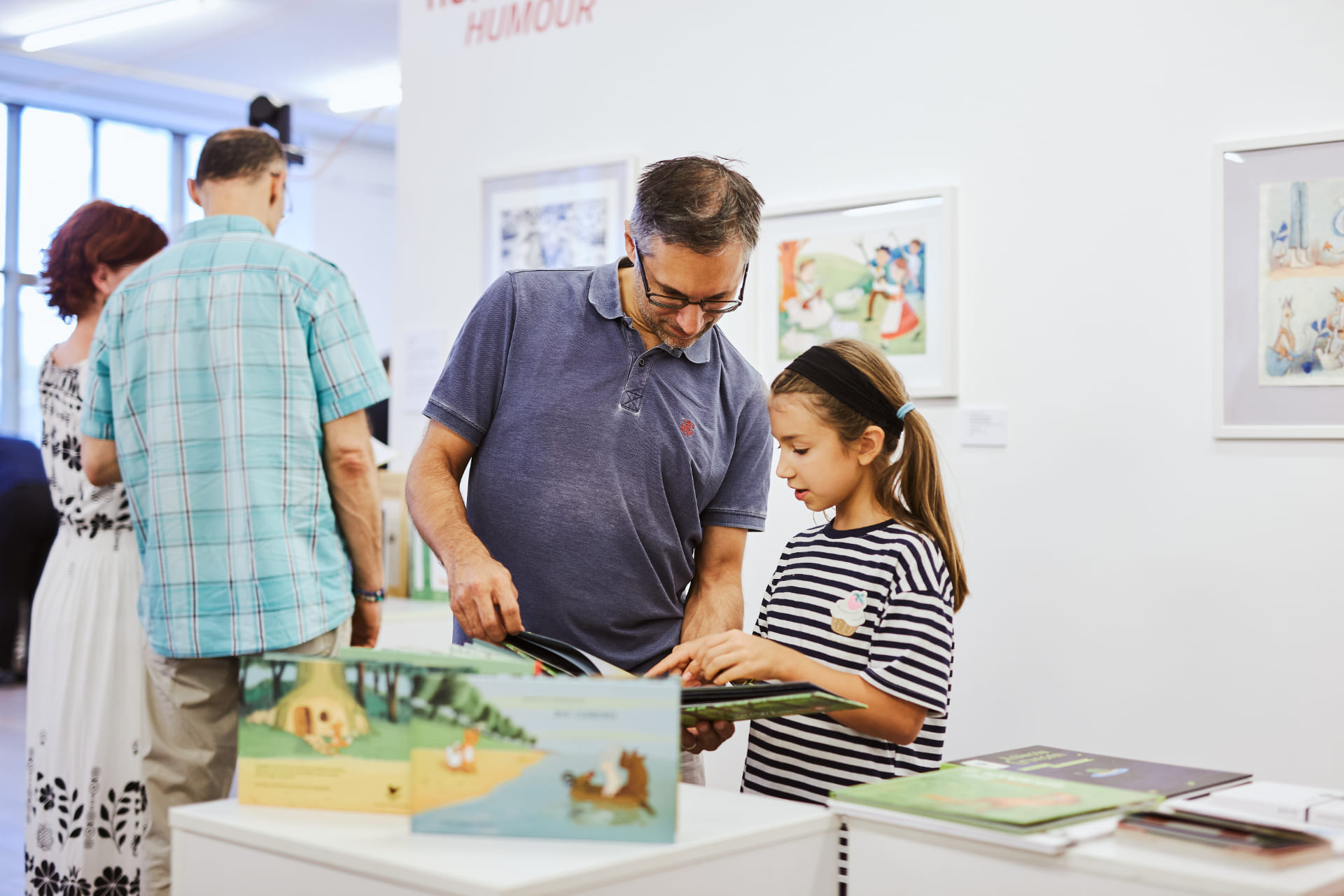
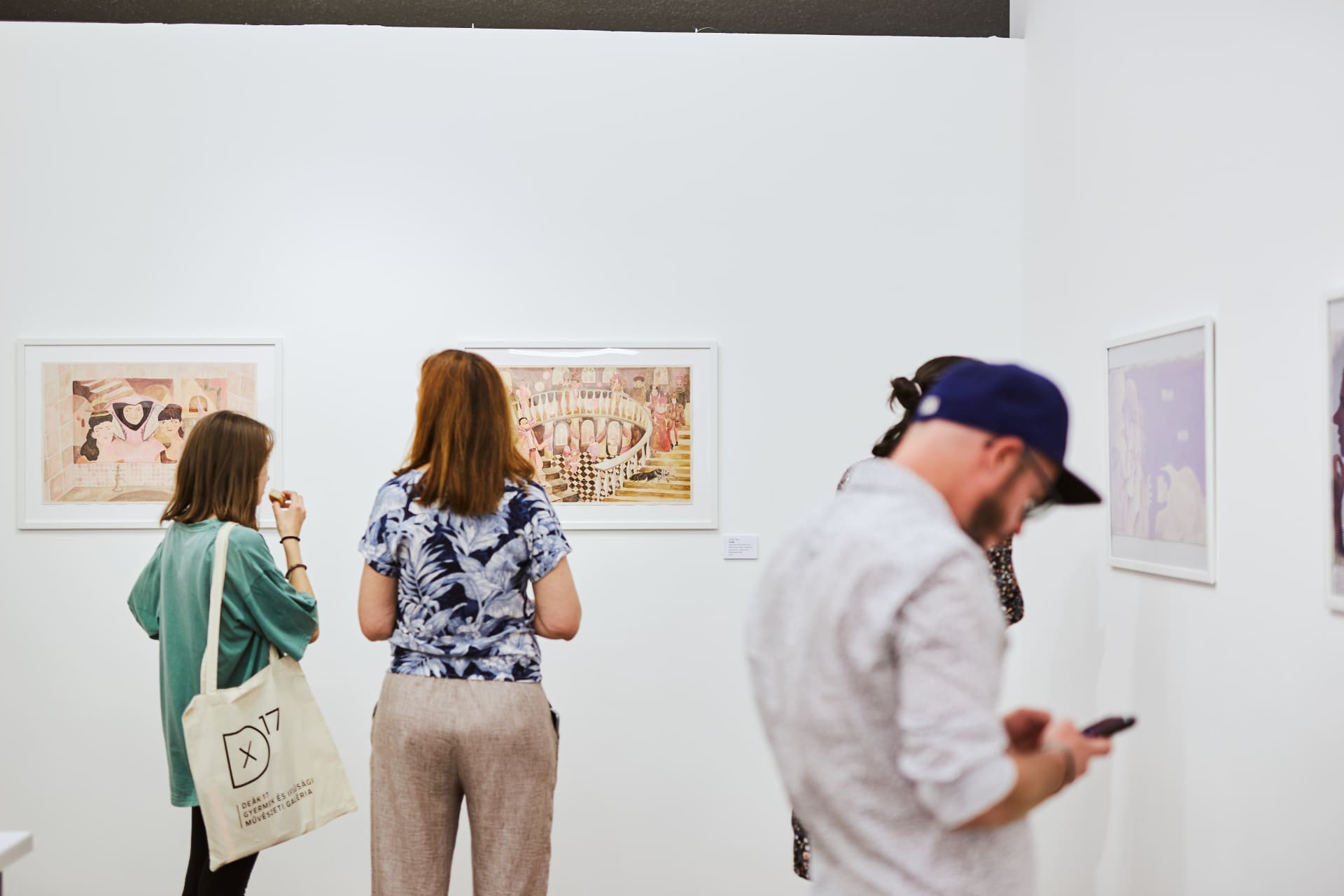
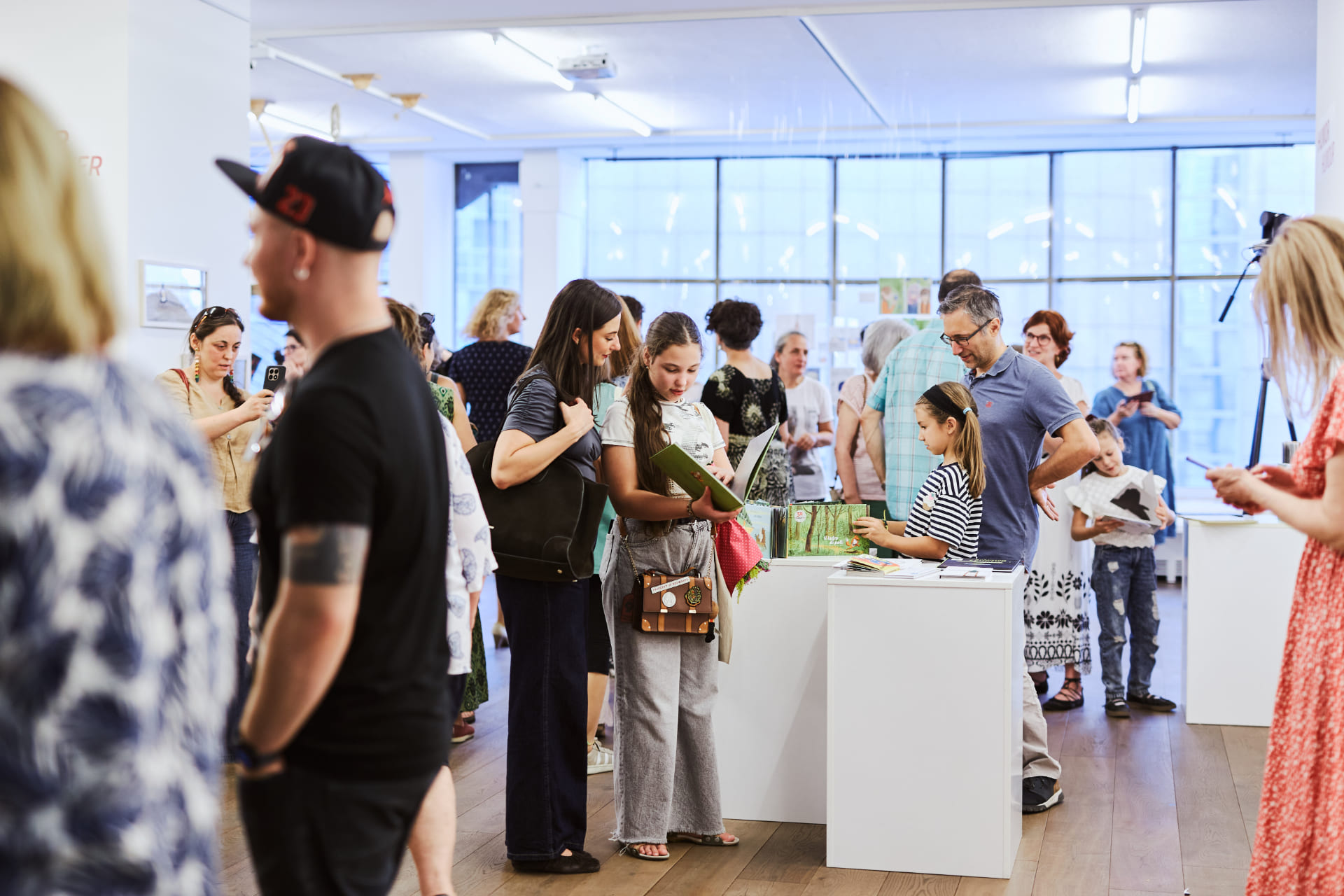
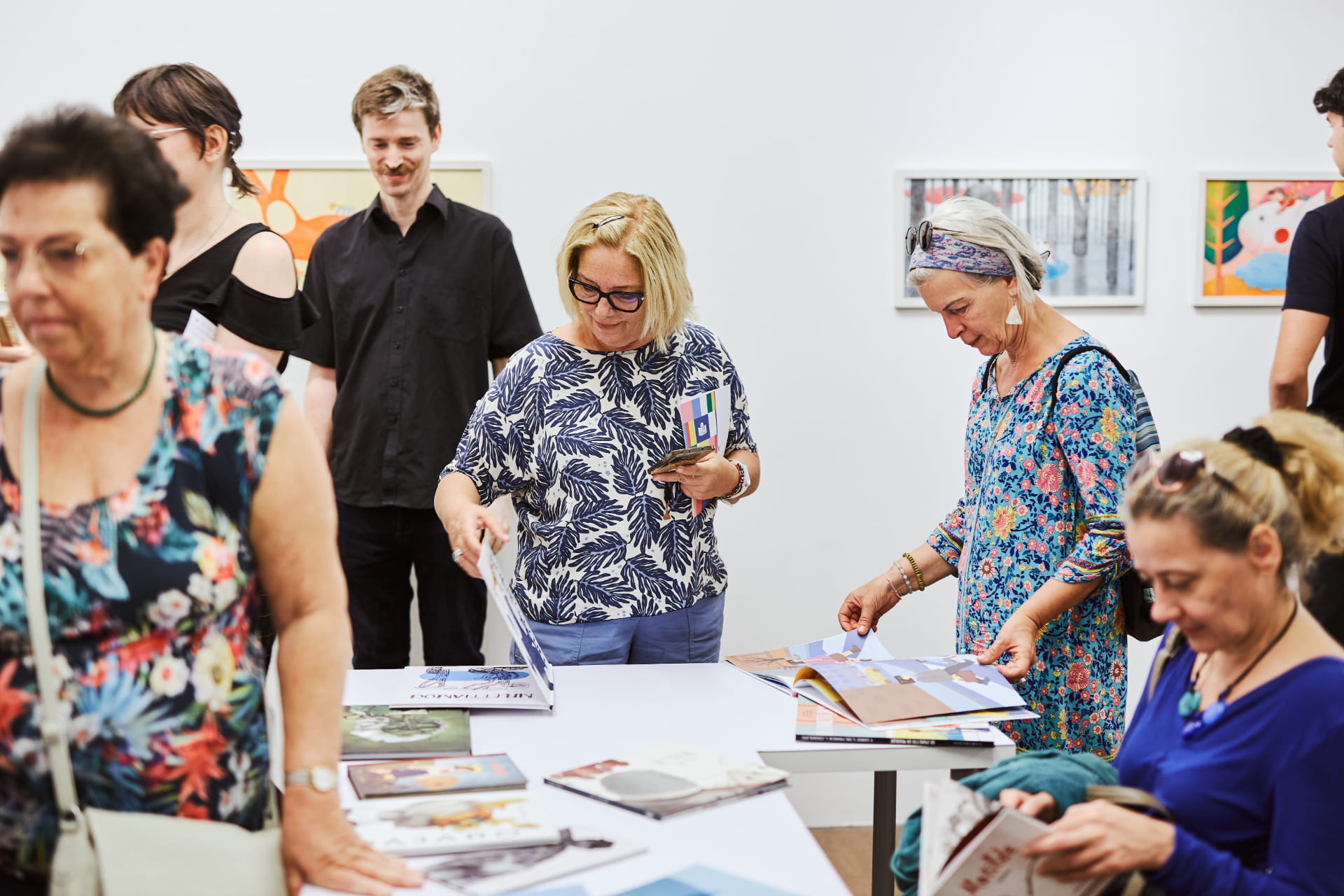
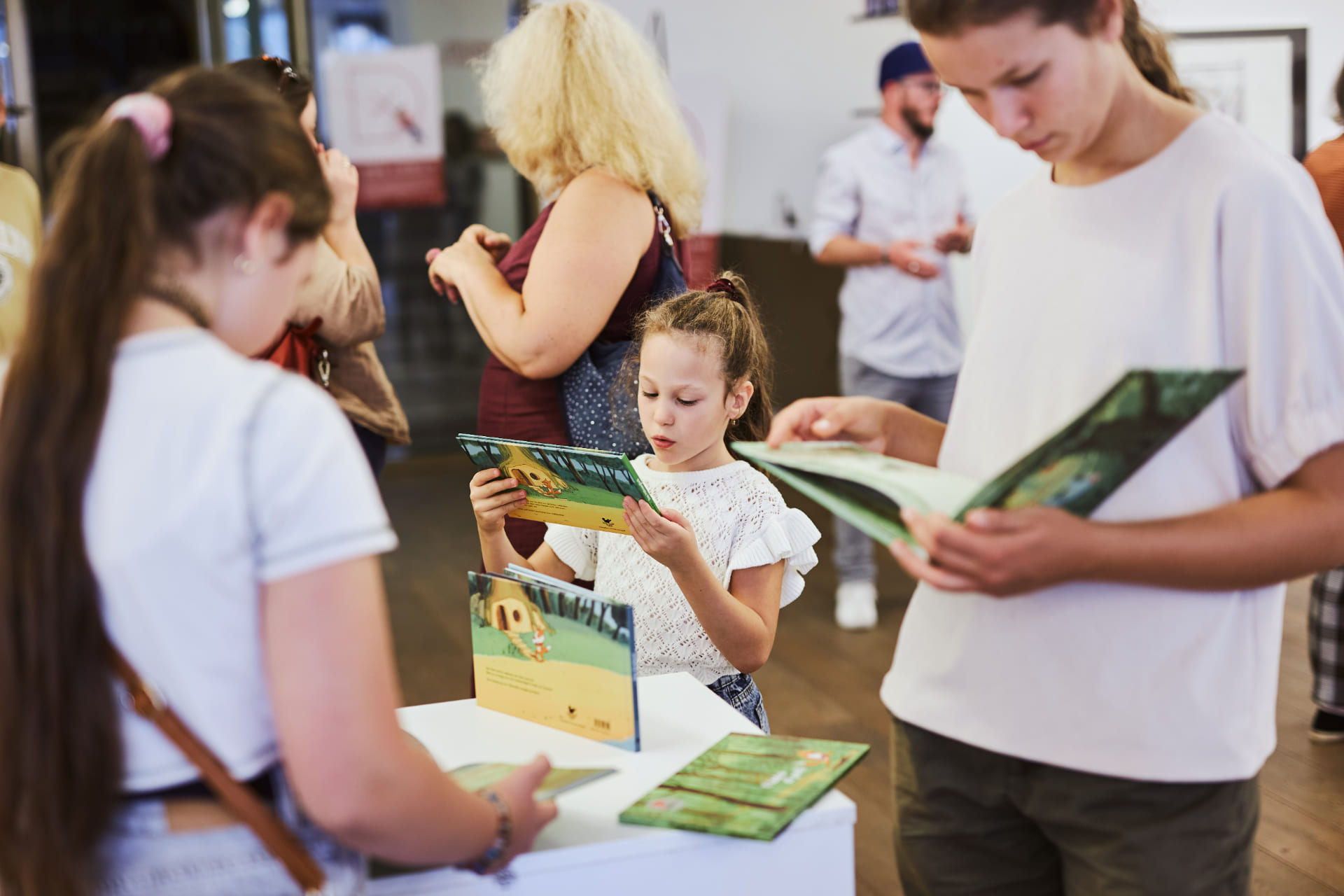
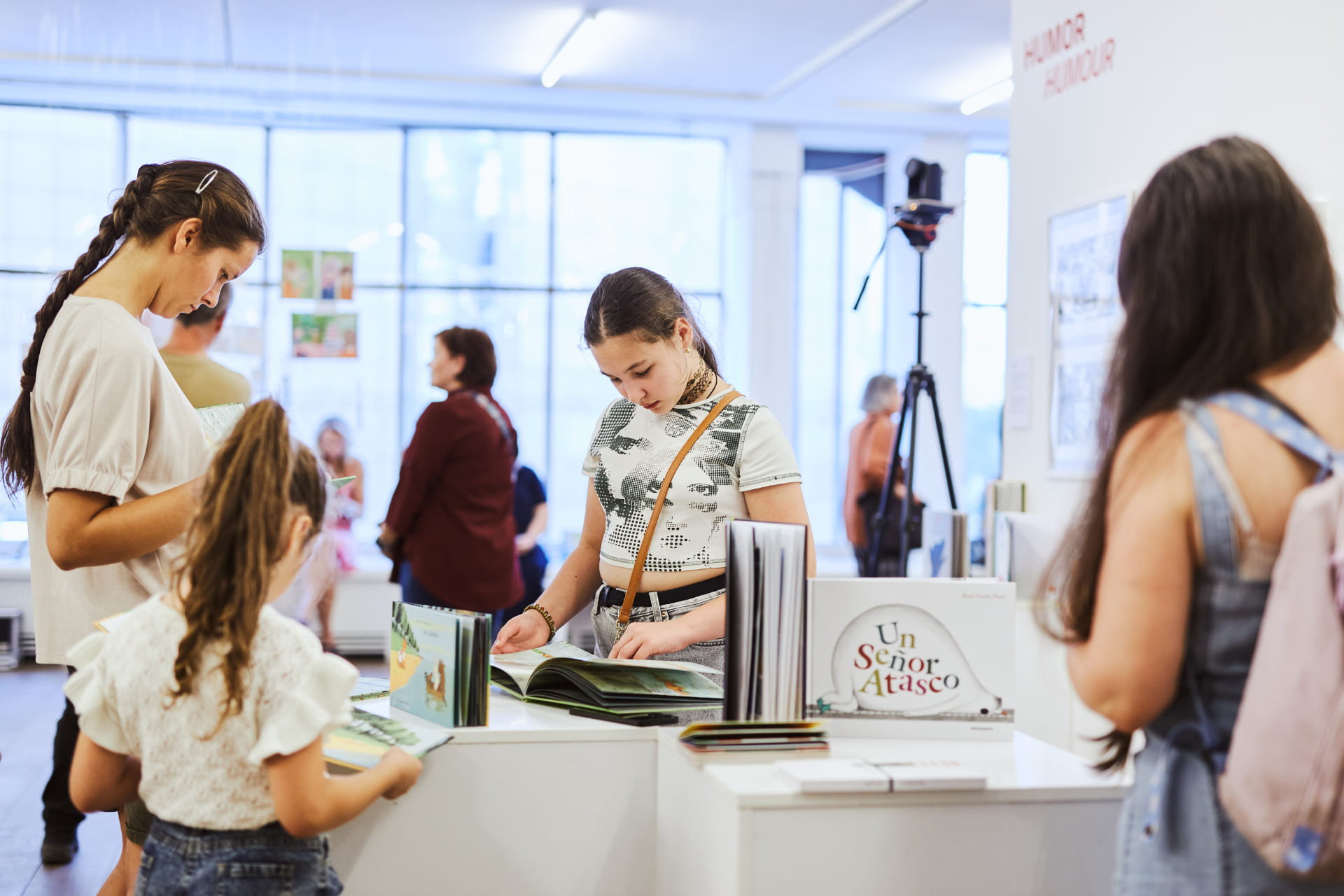
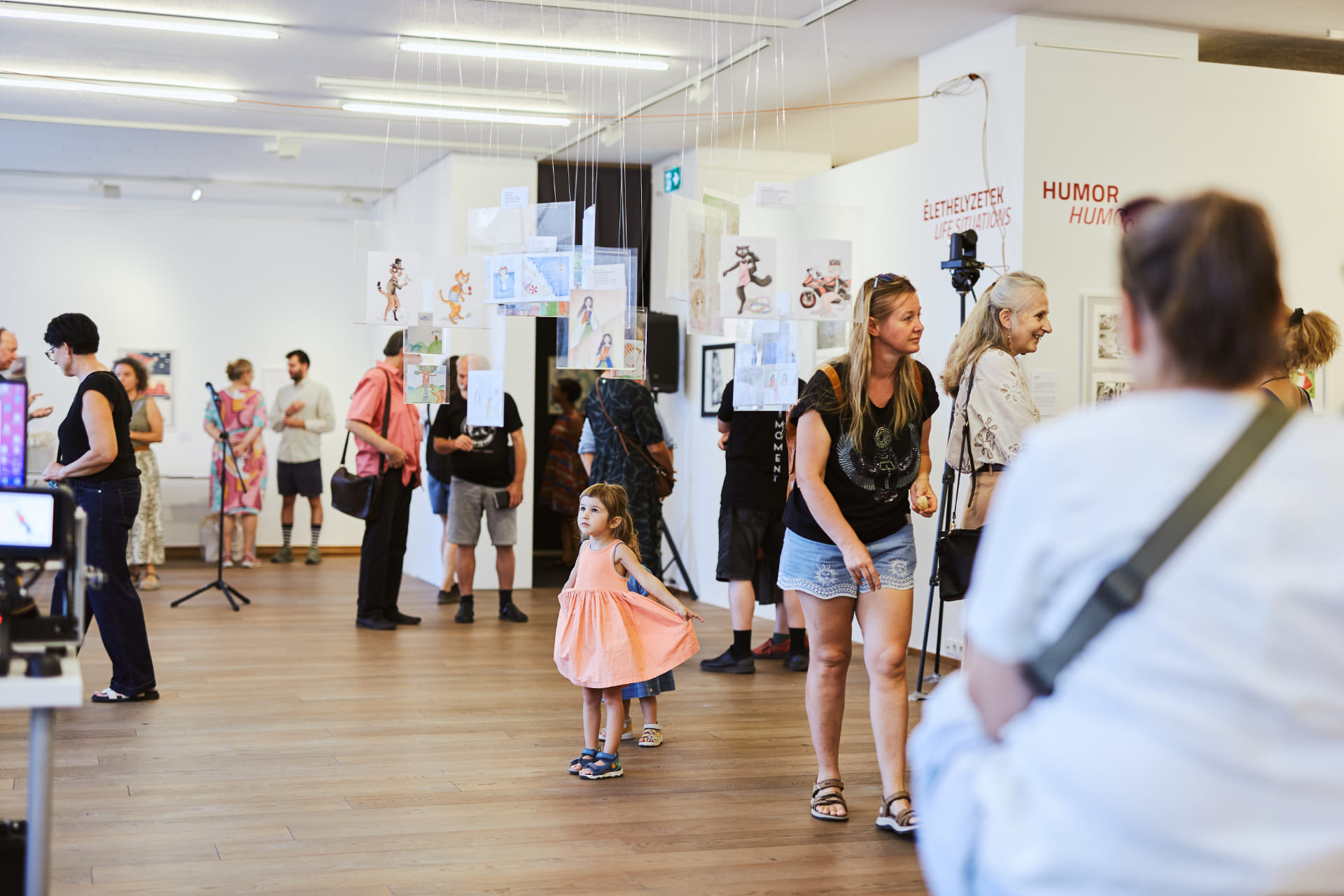
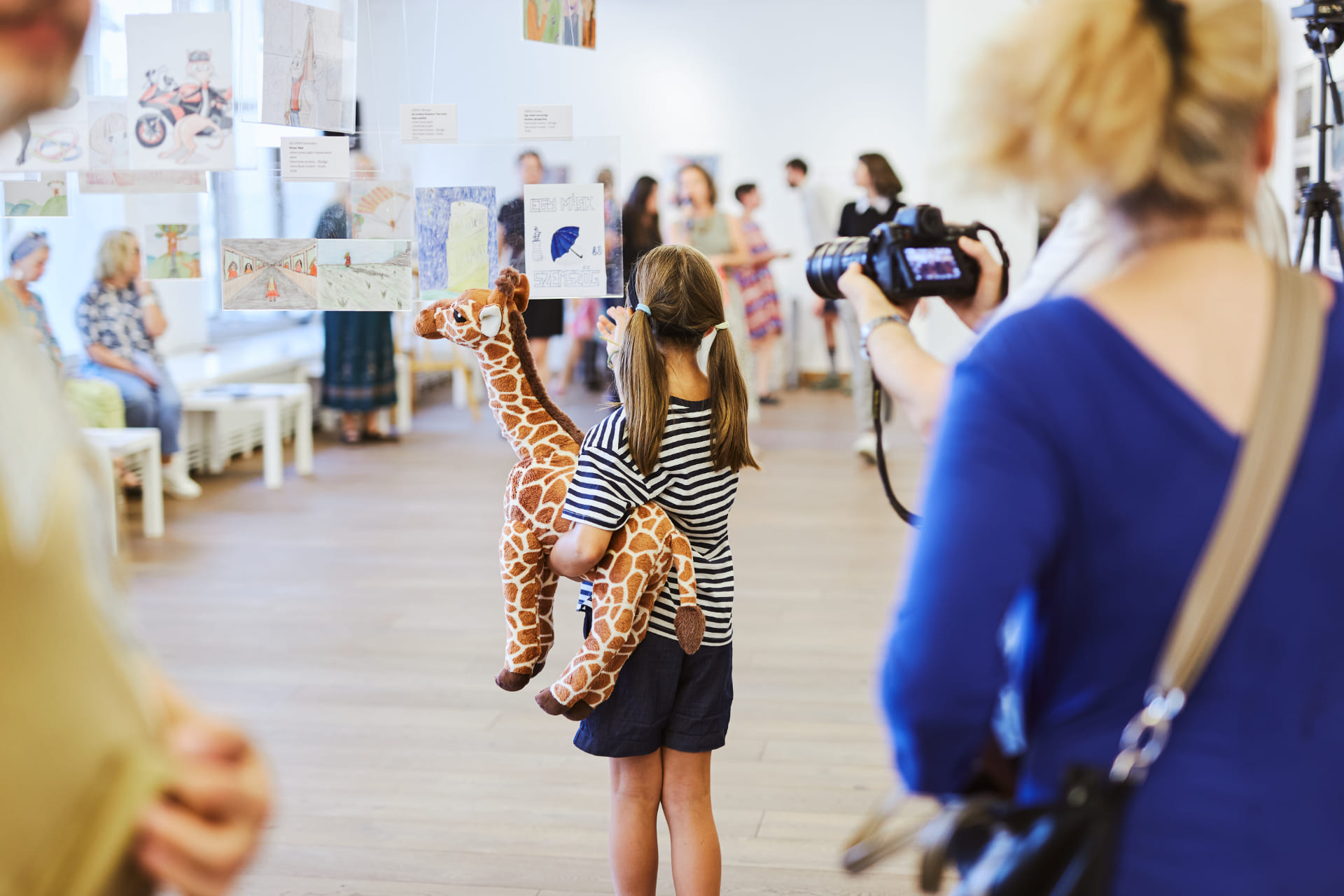
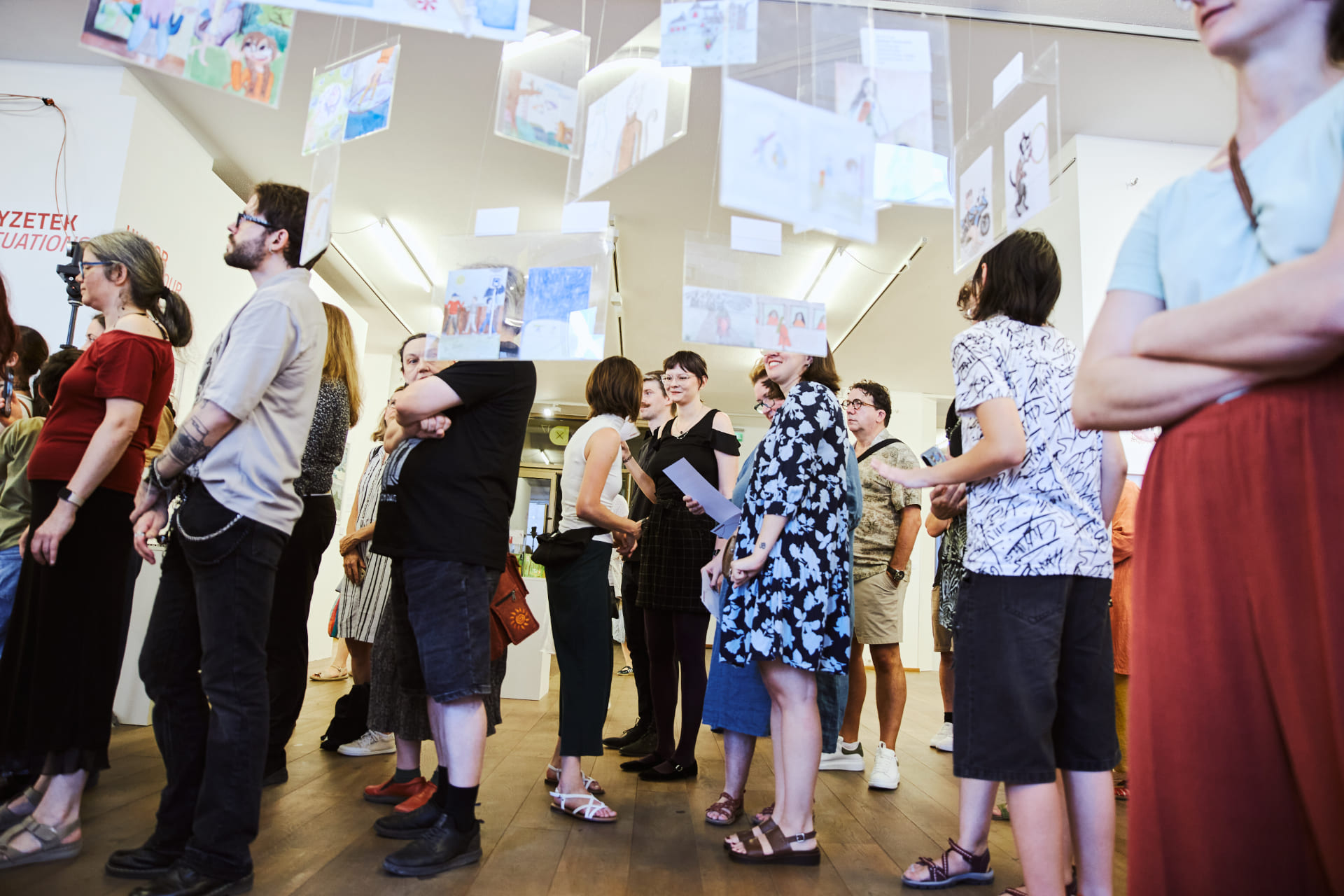
The exhibition focuses on the silent book genre, in which stories are told exclusively through images. The exhibition invites the audience to interpret the images as active participants and fill them with their own experiences and imagination: in this way, their own unique story is born in everyone’s mind. The central message is simple, yet timeless: a story does not need words. A well-constructed sequence of images can convey emotions, ask important questions and tell memorable stories on its own – because the language of images belongs to everyone.

Exhibiting artists include: Myriam BABARCZY, Kati BÓDI, Eva DELASERRA, Staffan GNOSSPELIUS, Zsuzsanna IVÁN, Ágnes KLEMAN, Ágnes KORBULY, Réka KORCSOG, Csilla KŐSZEGHY, Mariann MÁRAY, Roger OLMOS, Gabriel PACHECO, Blanka RADNÓTI, Eszter Anna RÁCZ, Kinga ROFUSZ, Tímea SZÁLER, Dániel SZINVAI, Beatriz Martin VIDAL

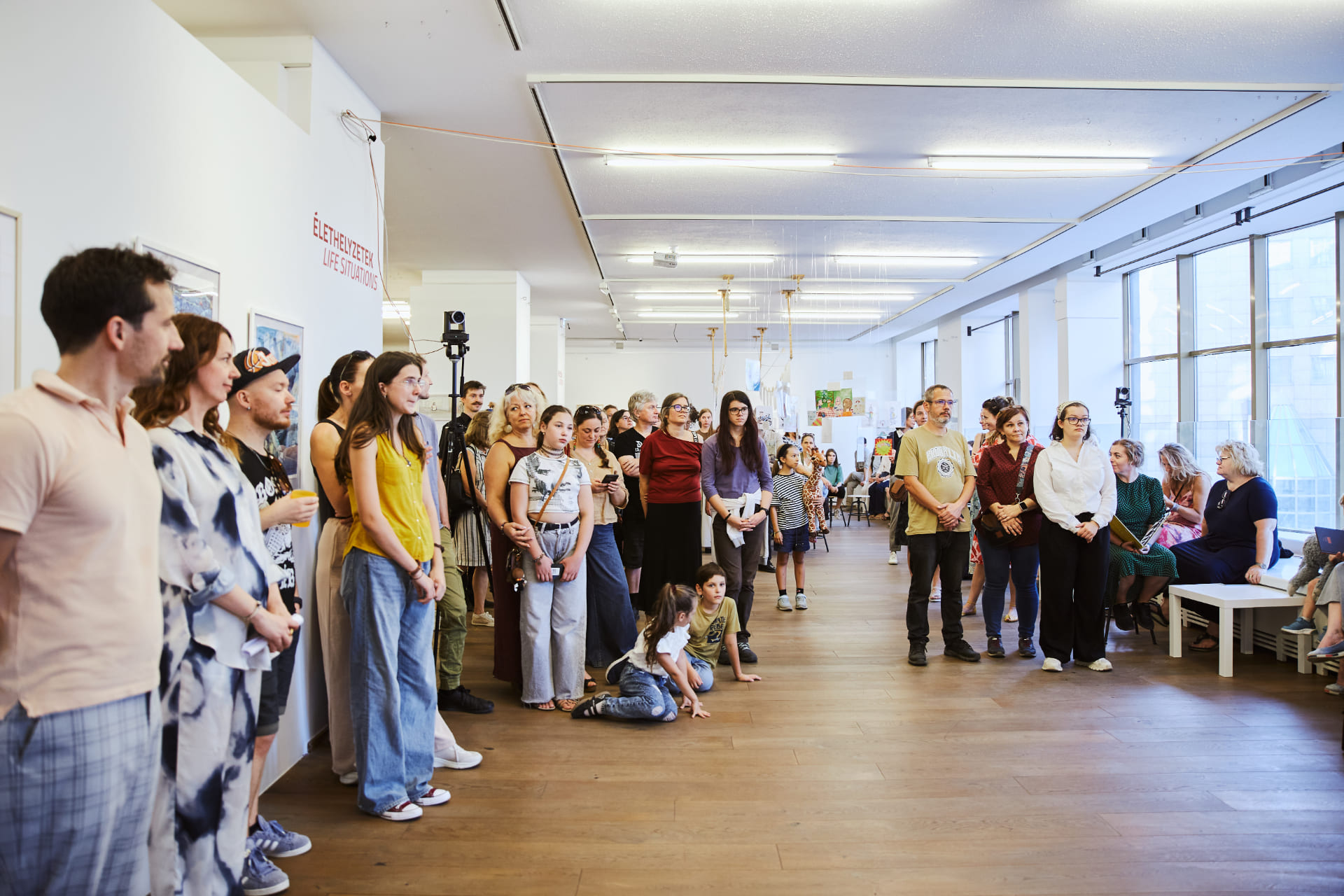
Opening: 8 September 2026, Tuesday 17:00
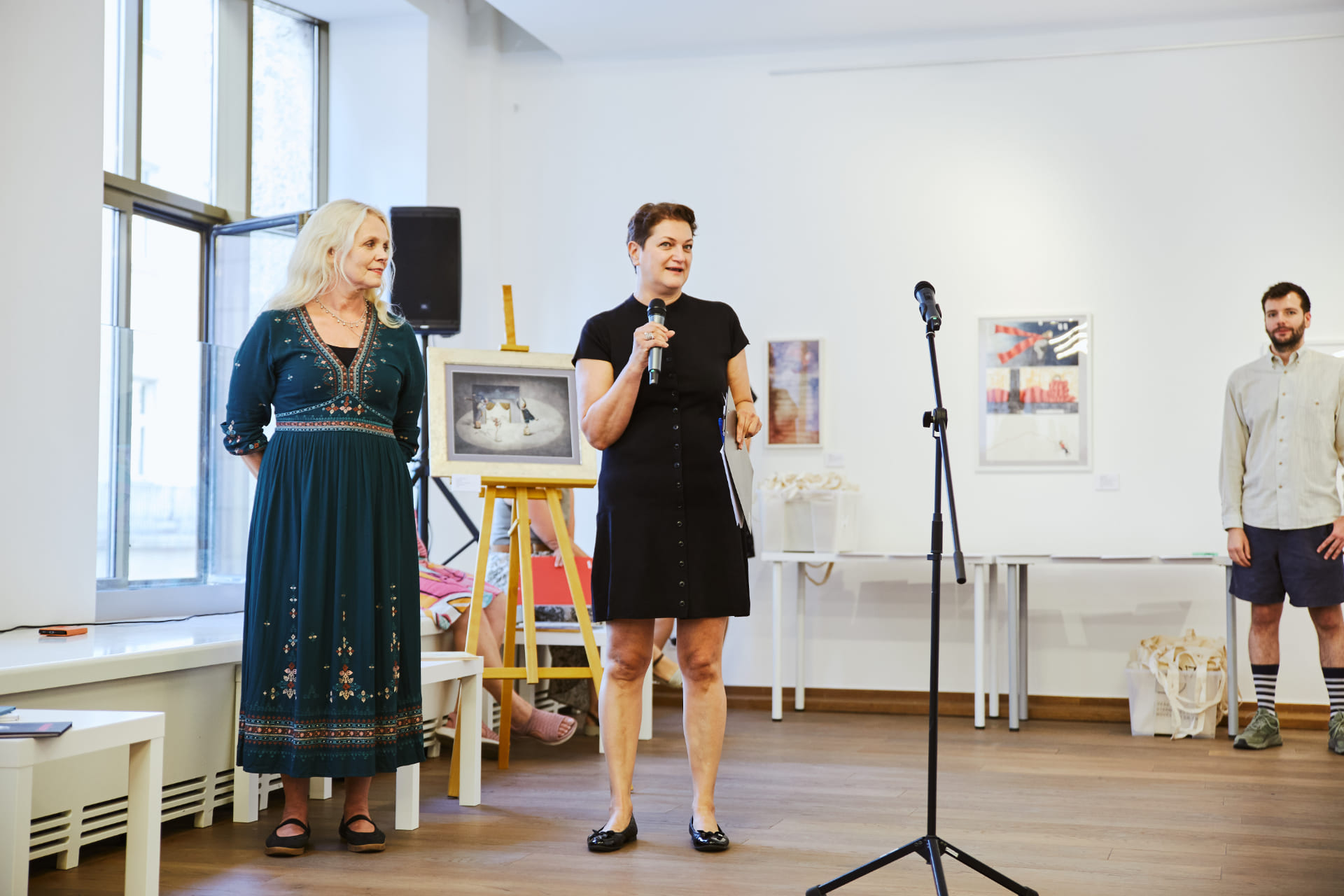
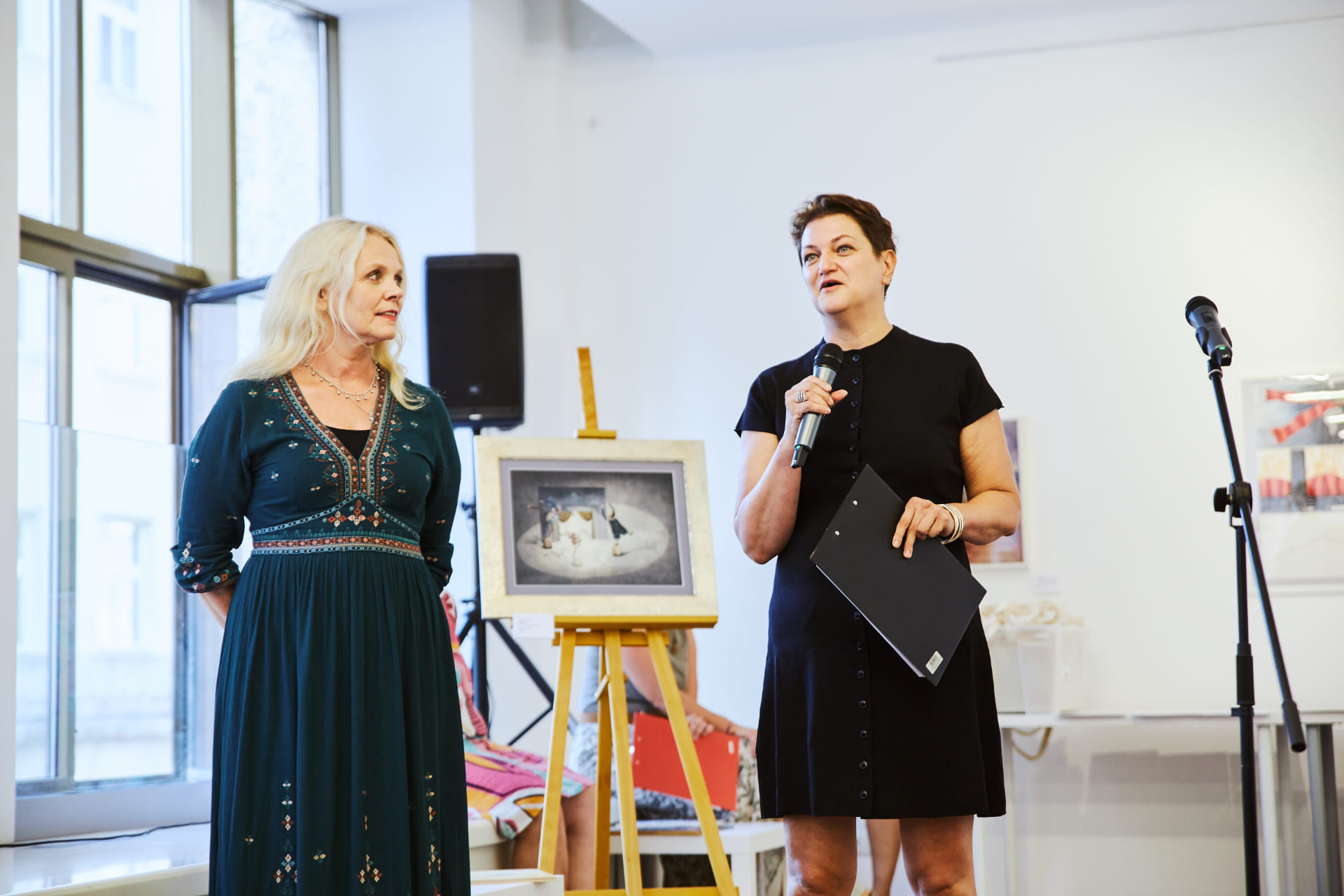
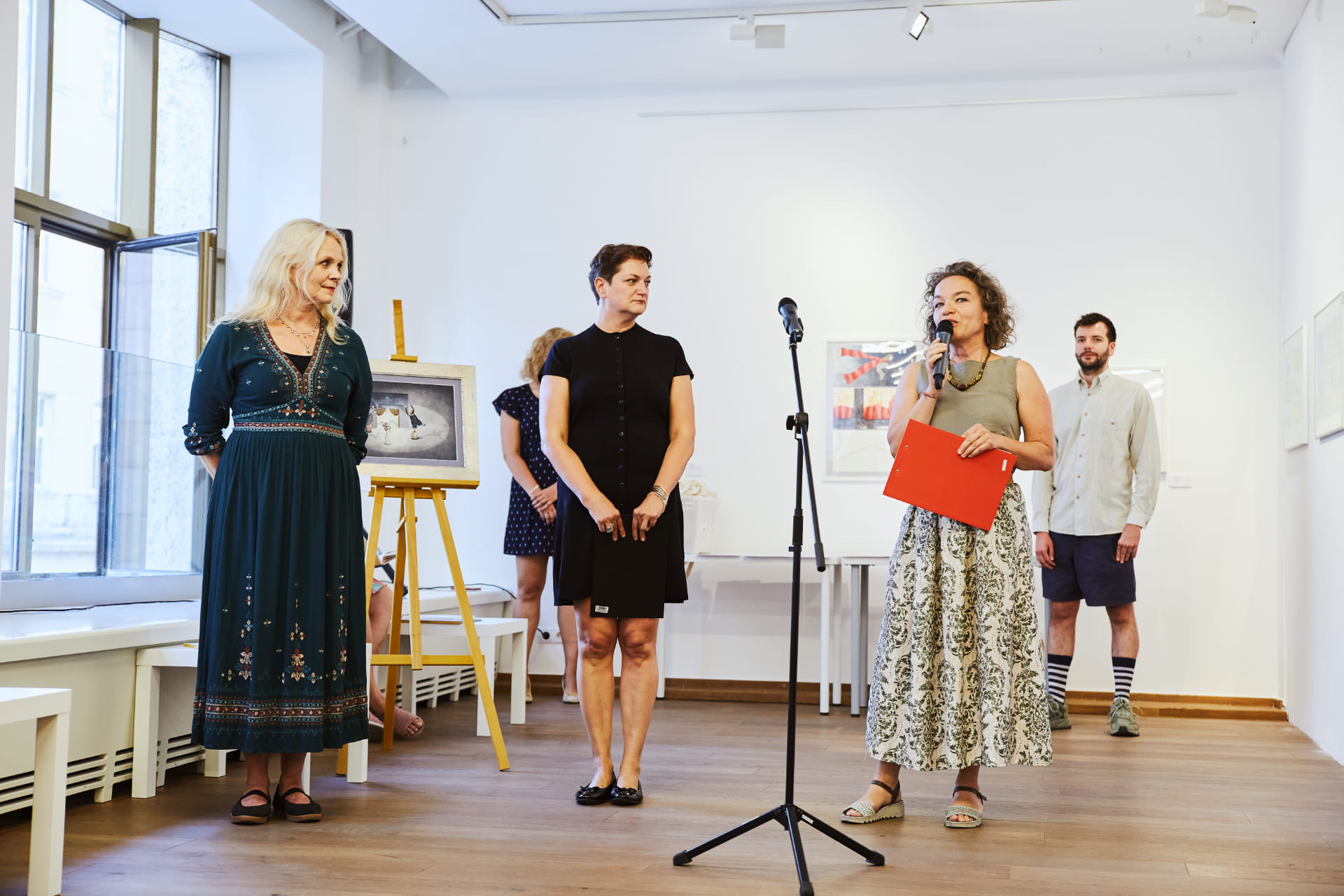
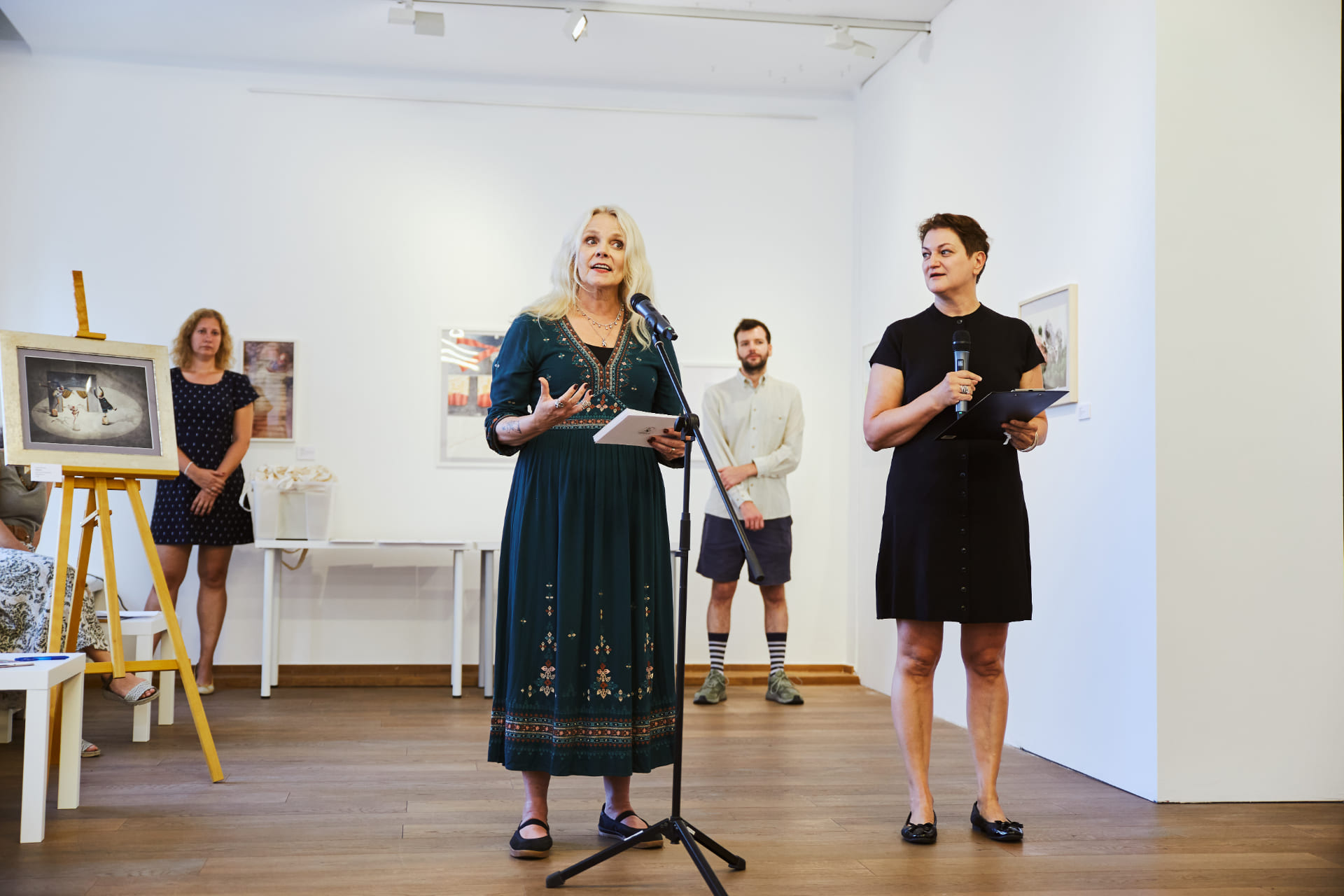
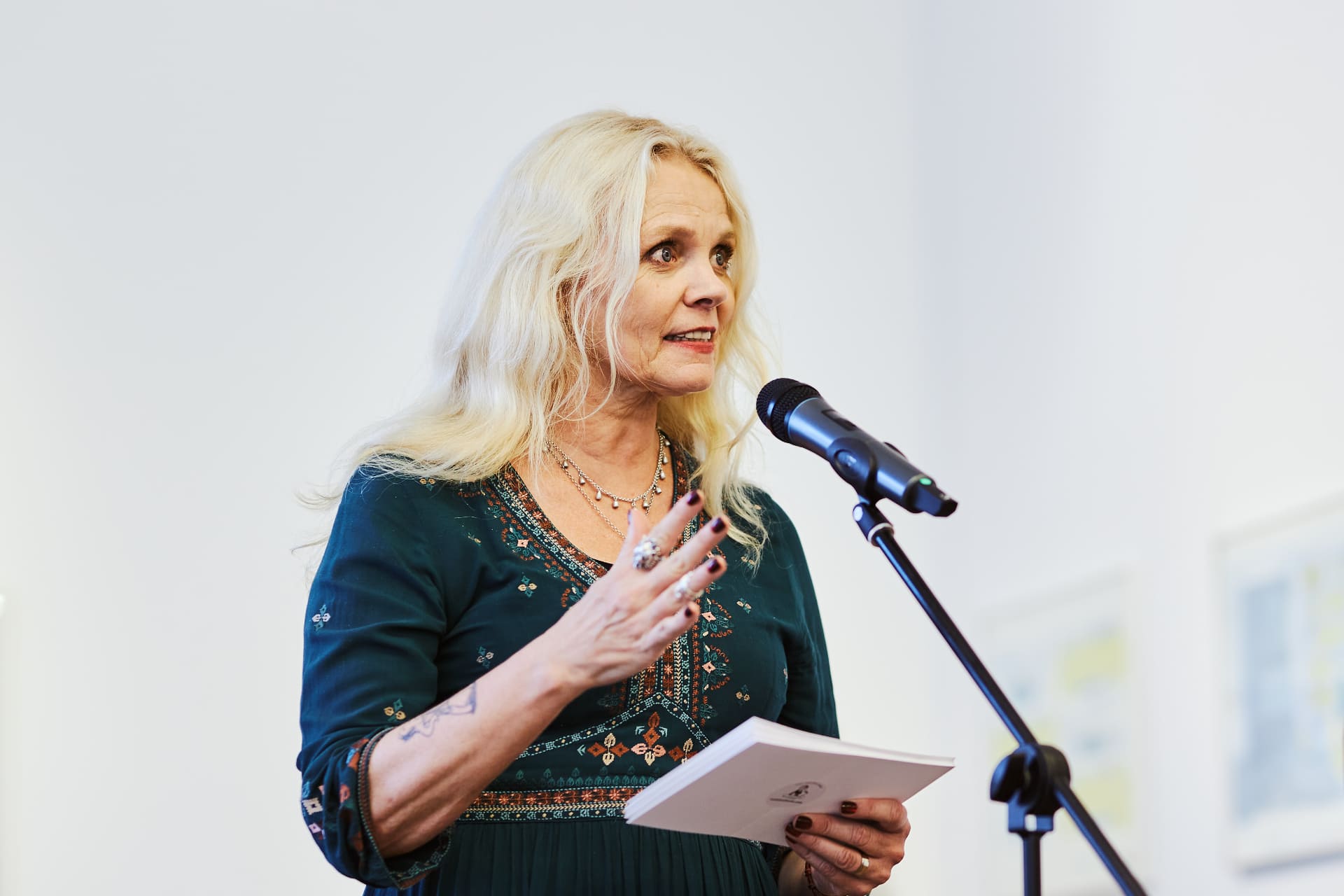
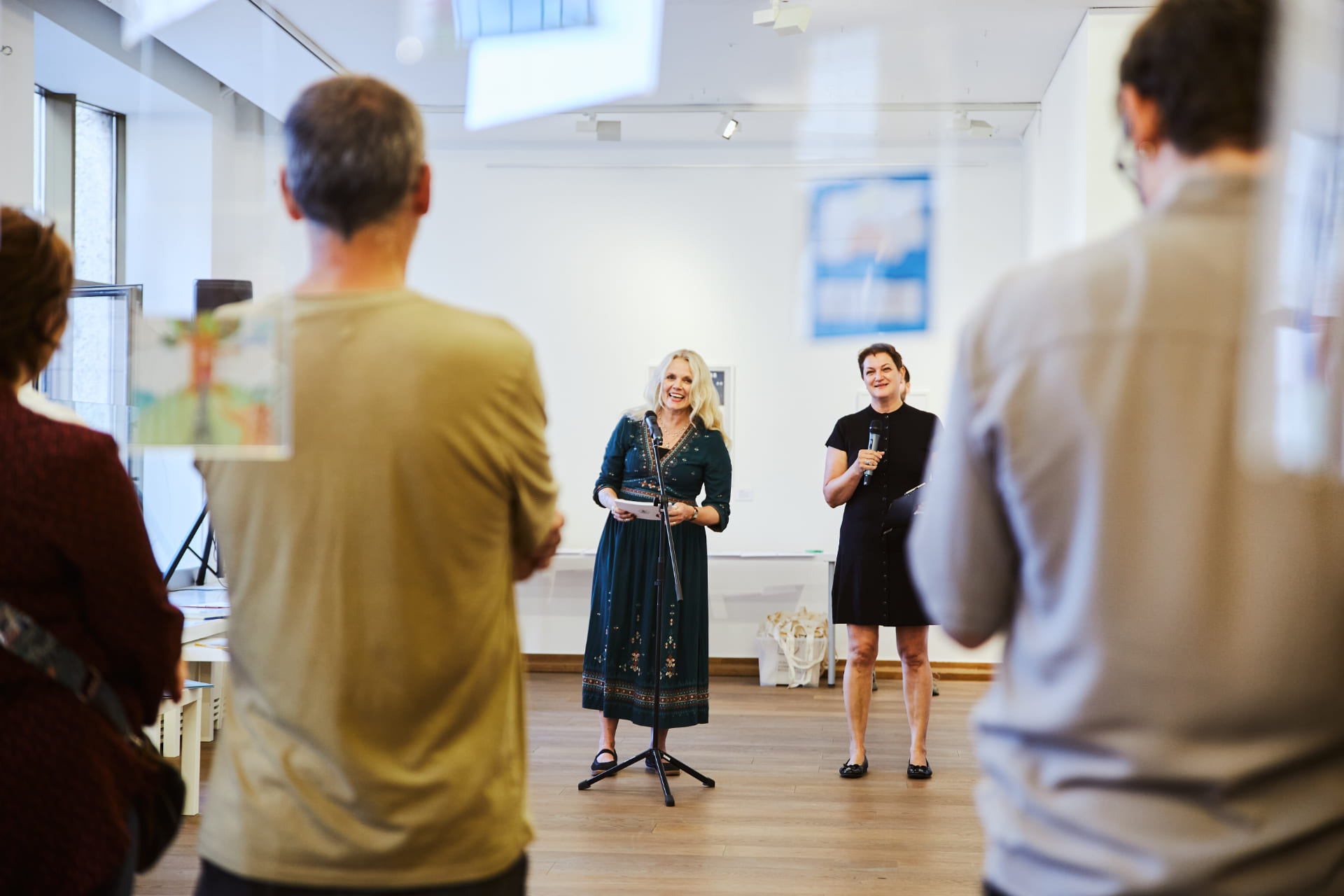
Opening speech by: Anita BERGE, manager of Fabel Silent Book Library in Oslo
On view: 2026.09.09.-2026.11.07.
Curator: Zsuzsanna BLASCHKE, art manager
In cooperation with: #fairytailprojects, Weeskinders Publishing, ZEBRA Pen EU Kft.

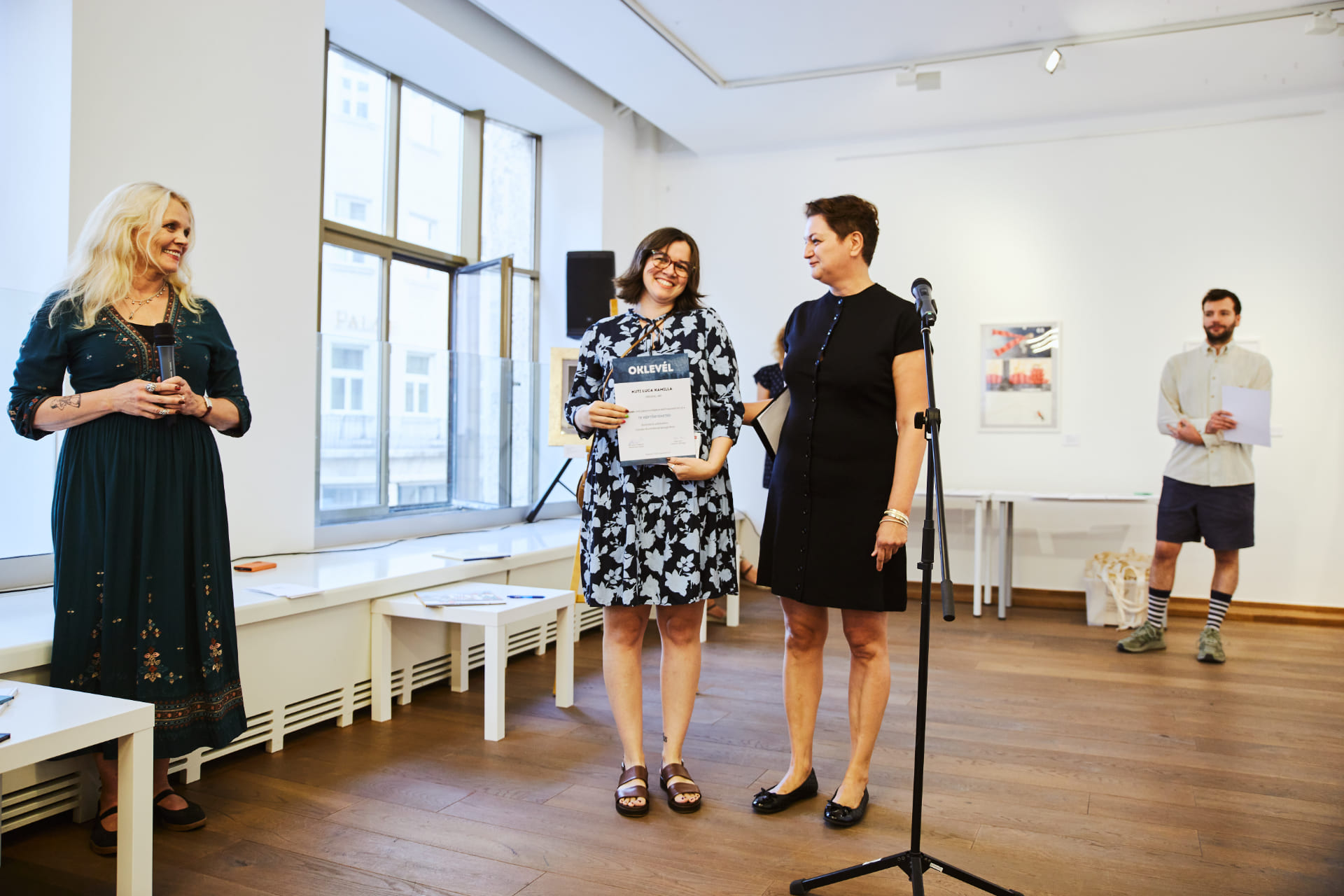
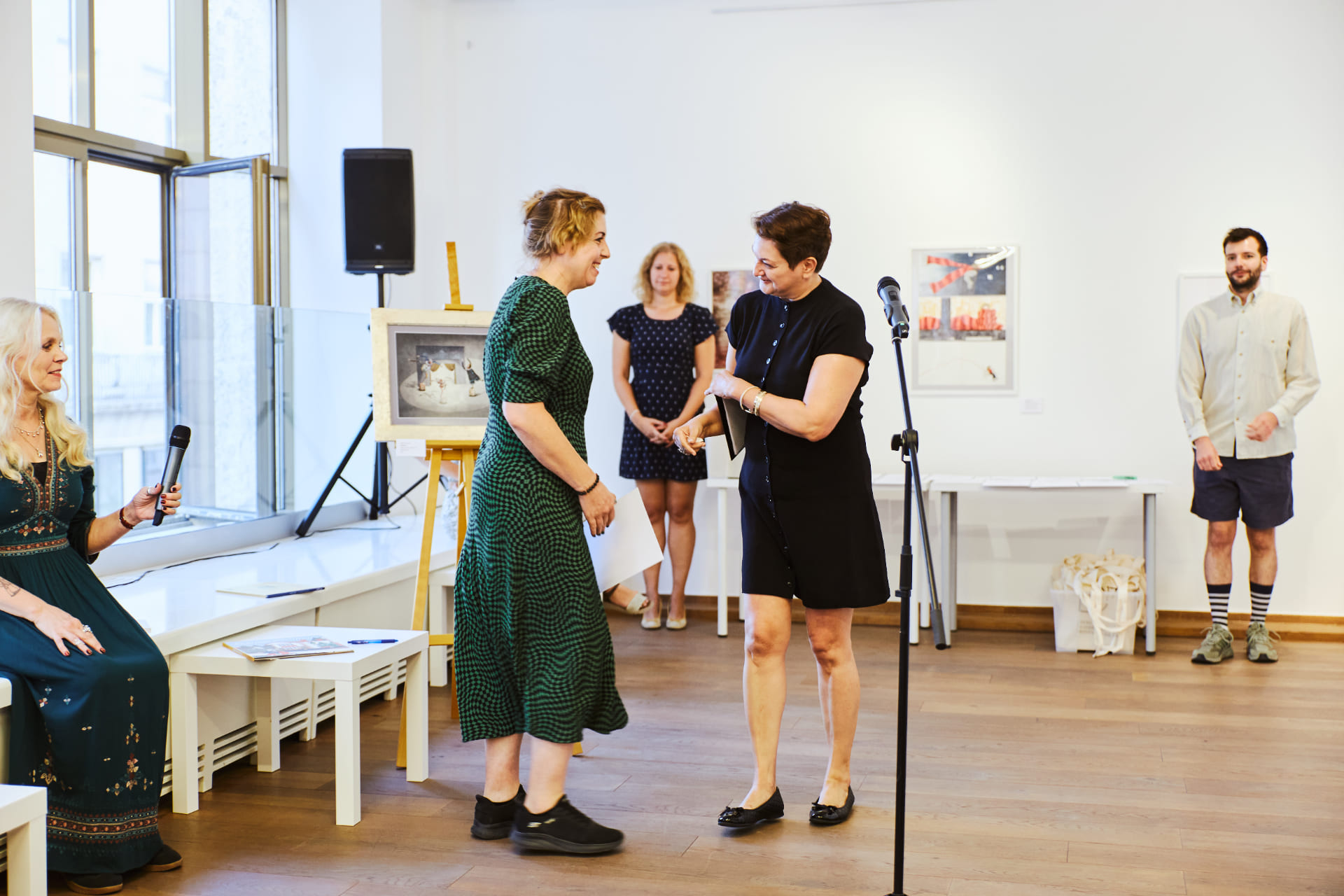
We are grateful to Weeskinders Publishing and ZEBRA Pen EU Kft. for their generous support in providing prizes for the contest winners.

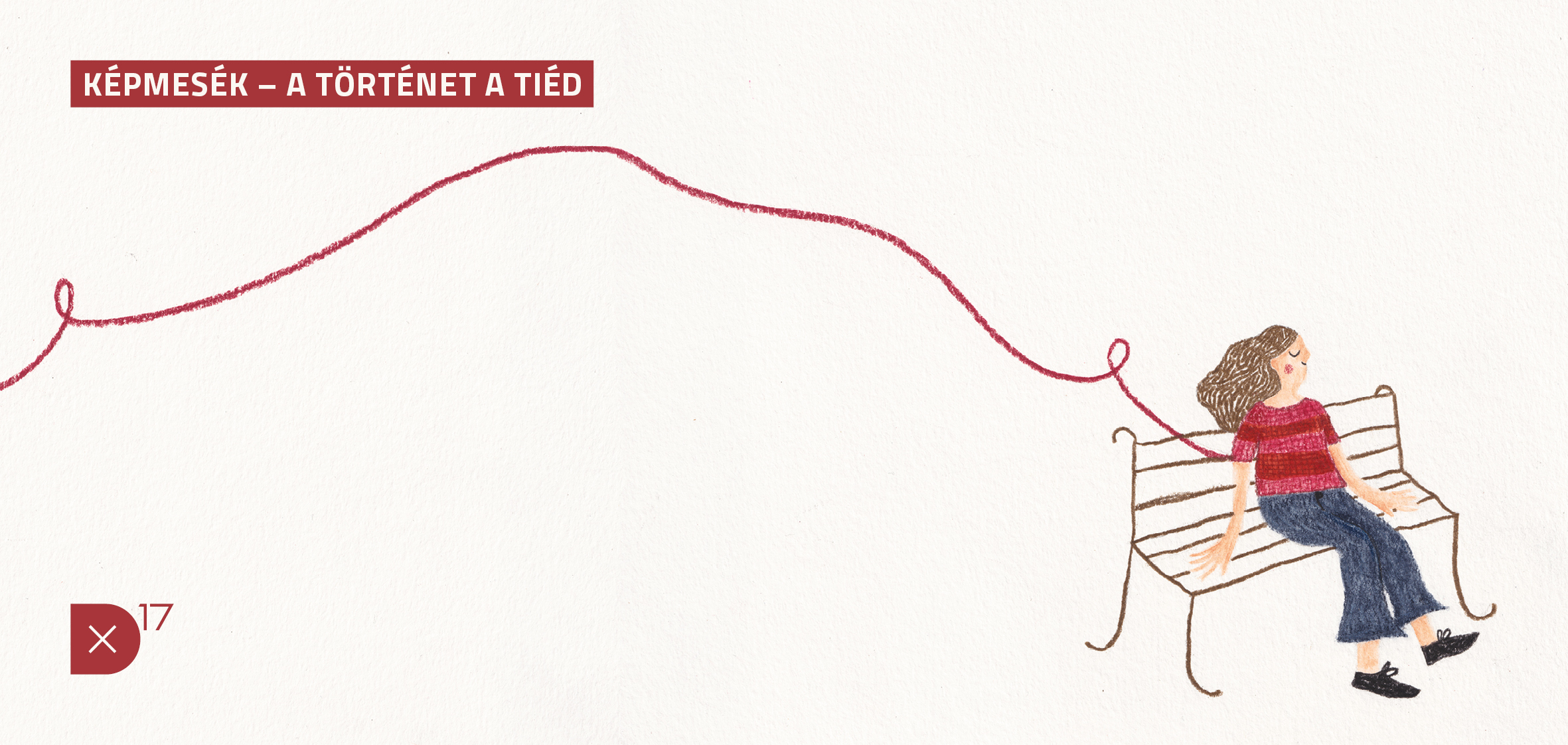
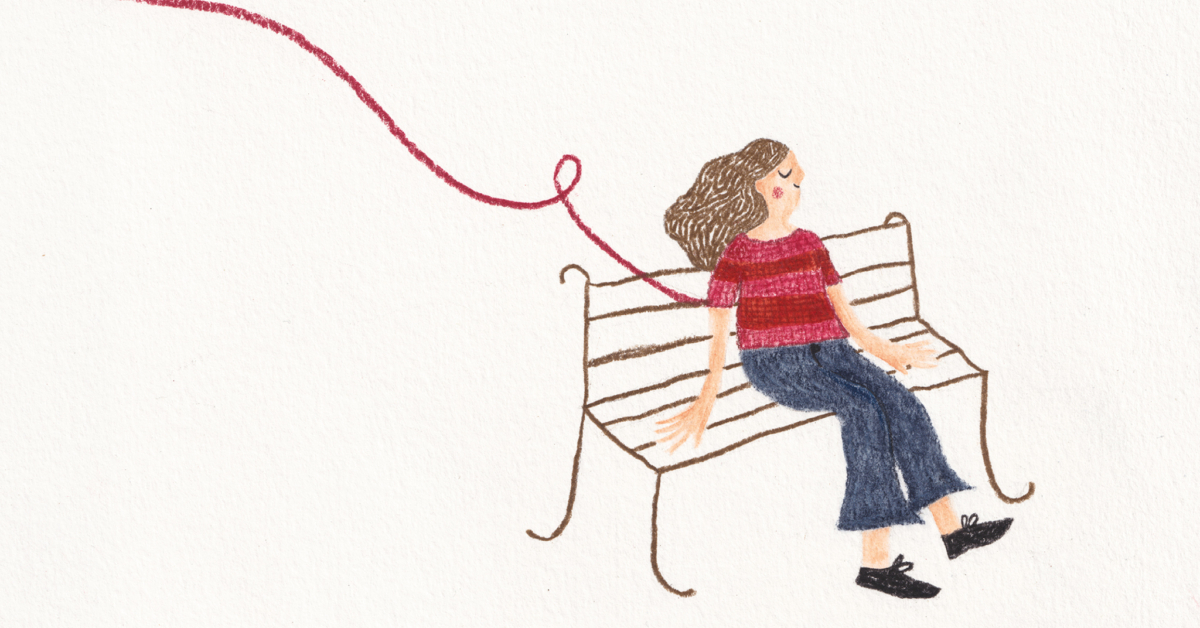
Cover illustration by Luca Kamilla KUTI.

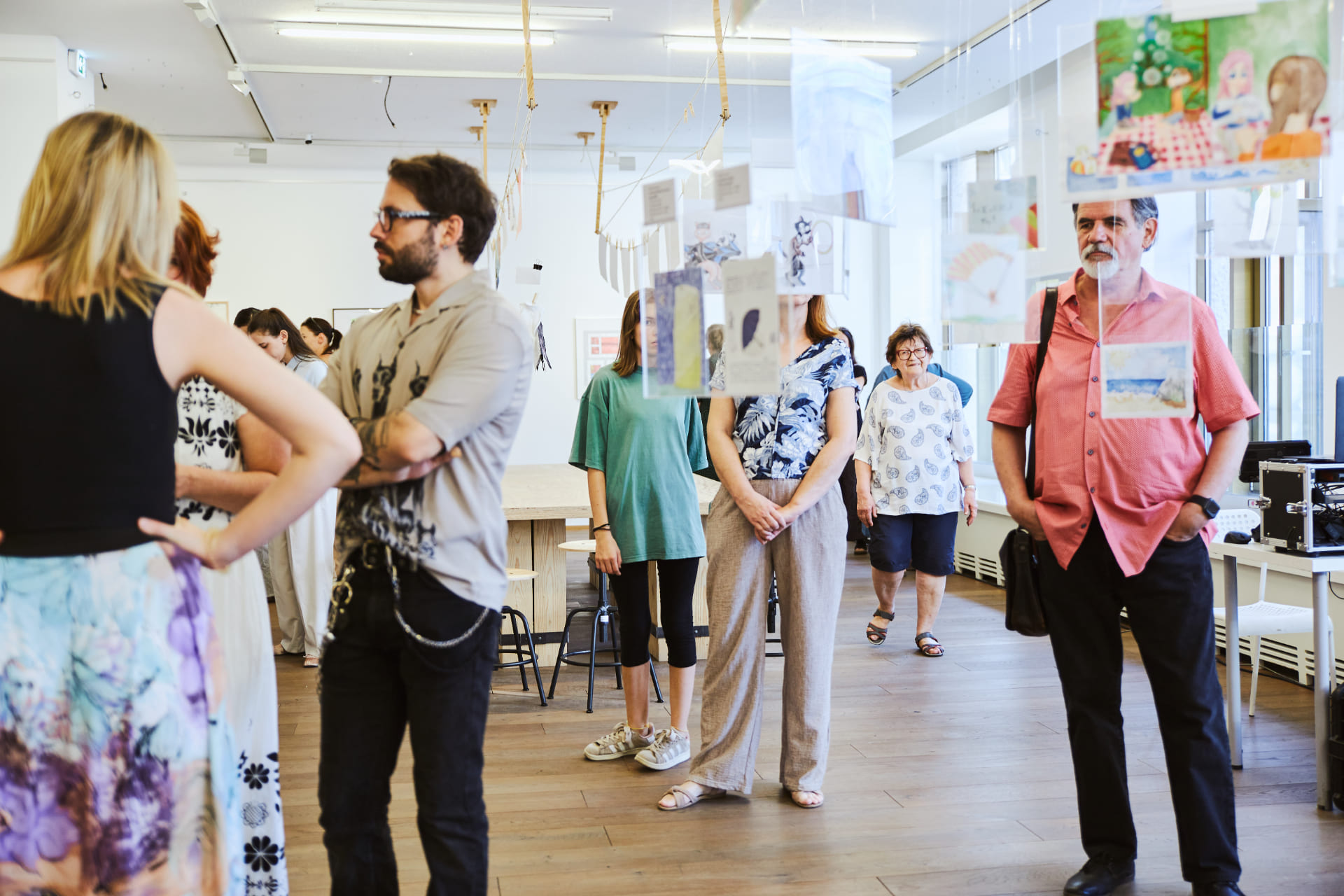
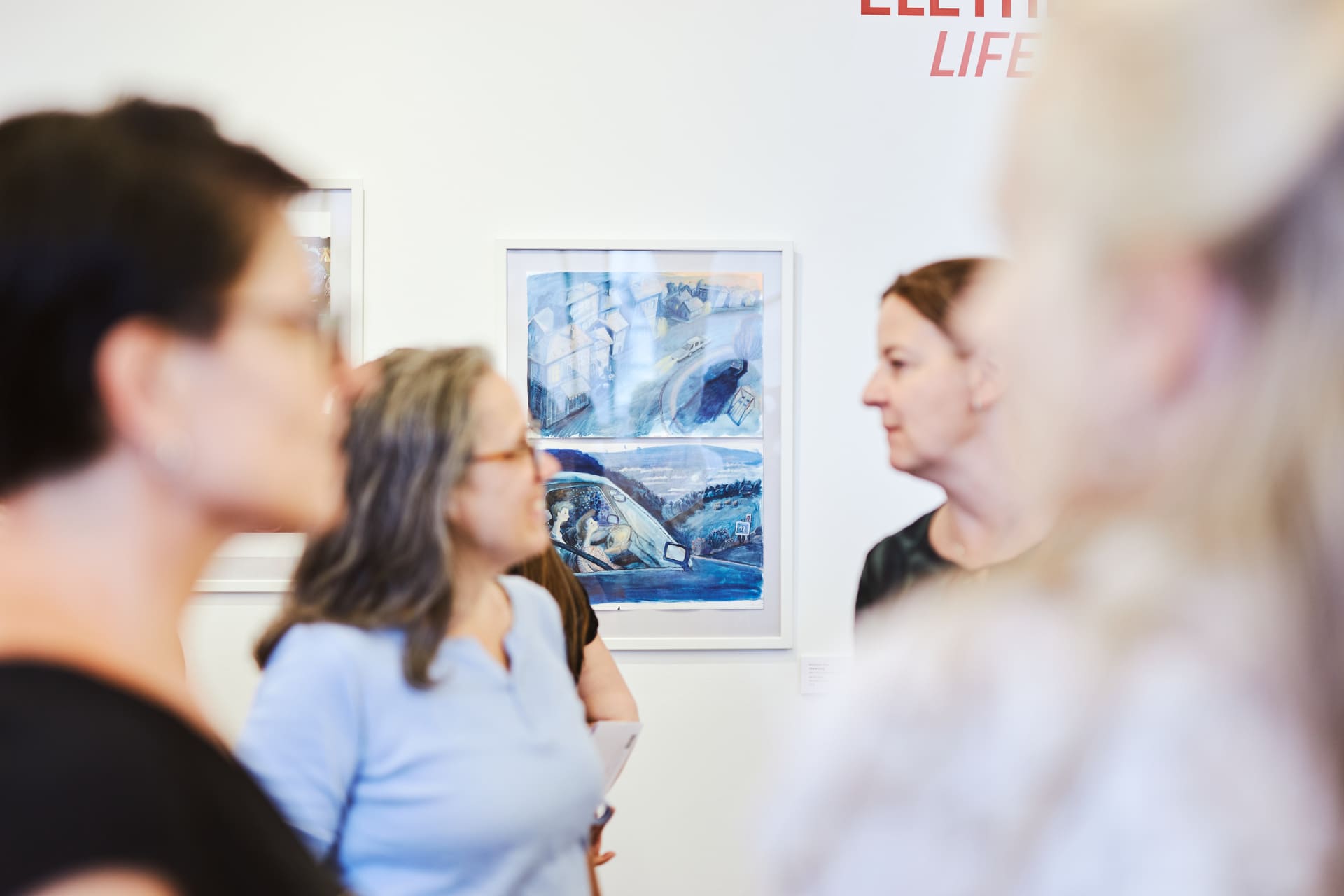
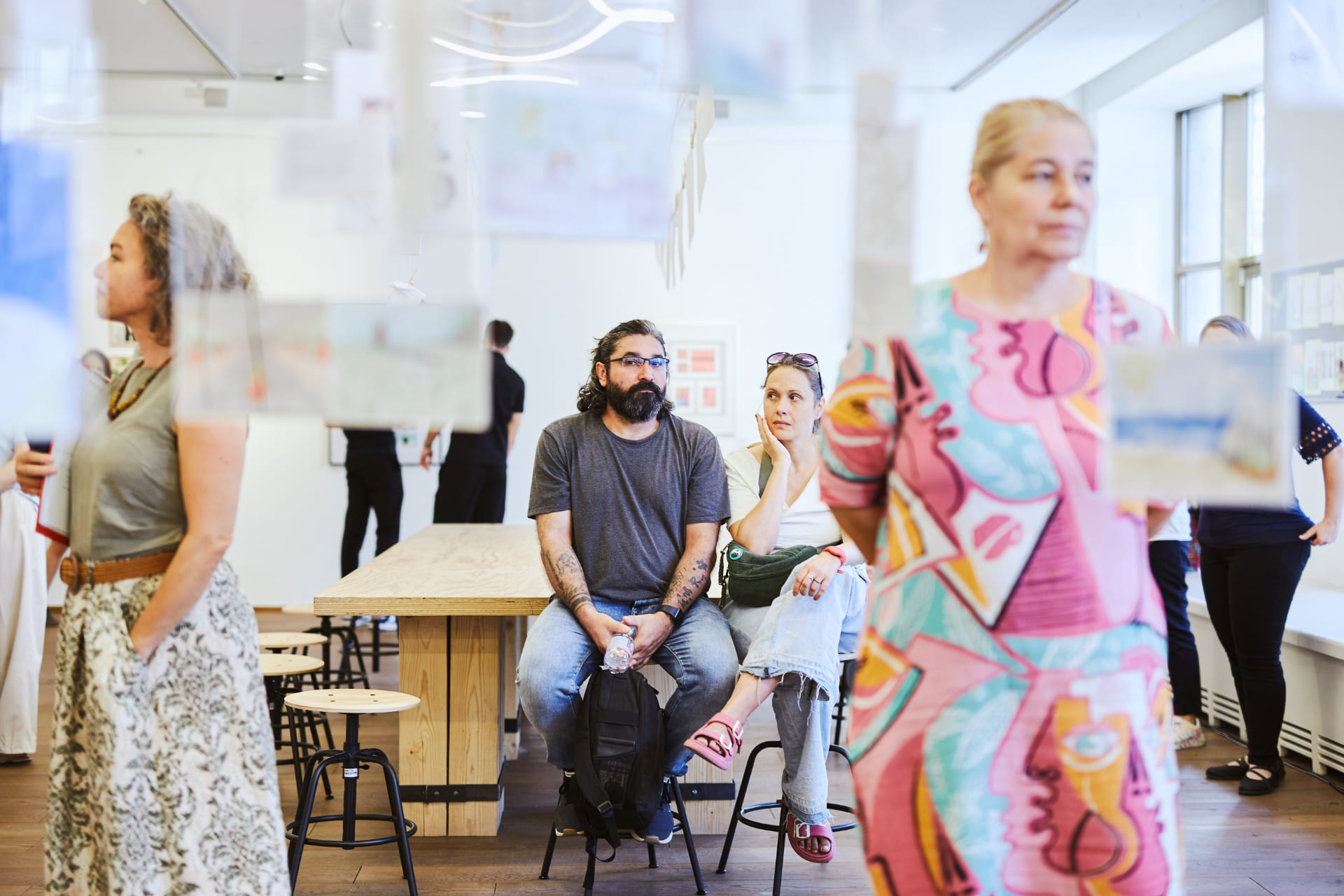
Photos: Krisztina Bilák
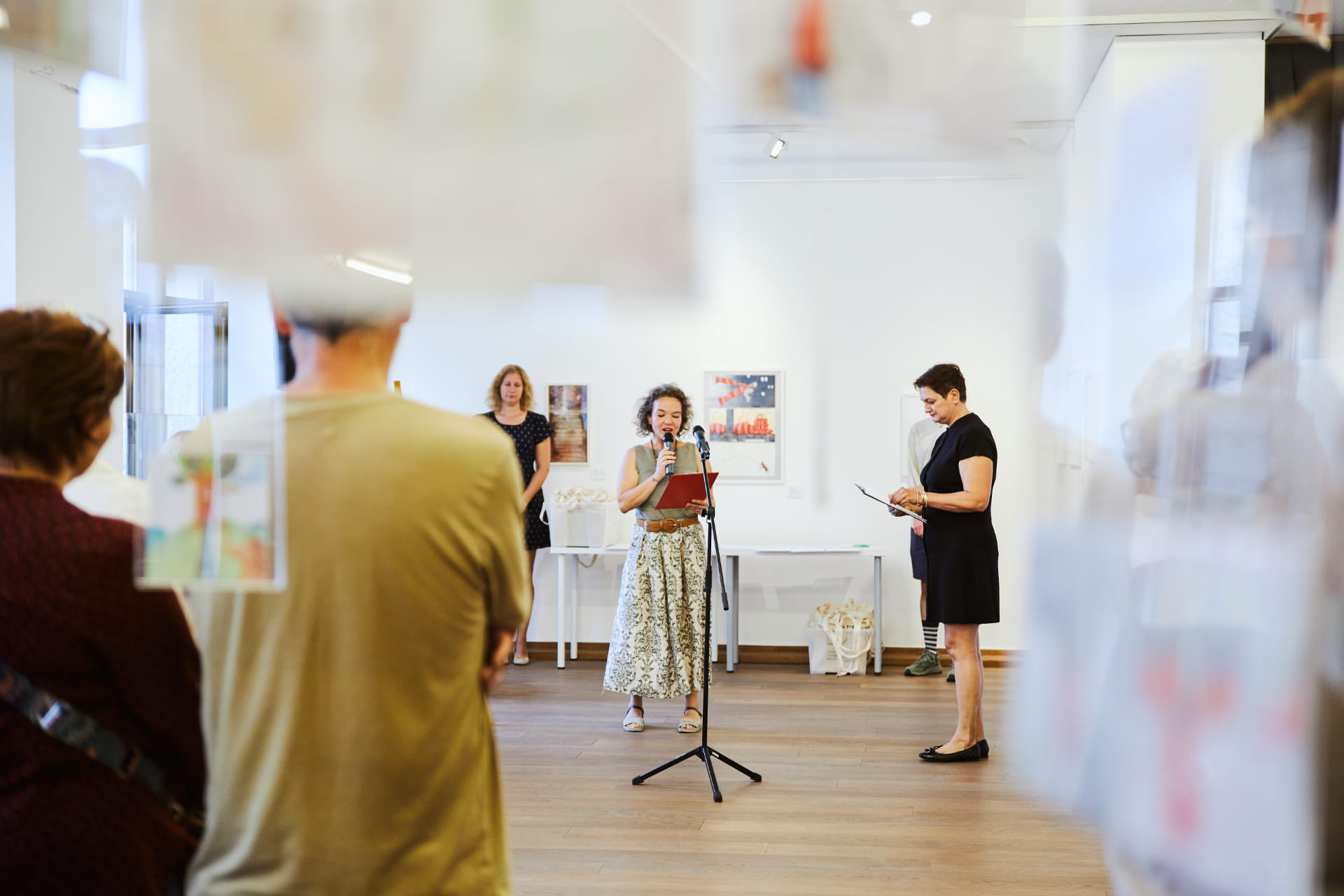
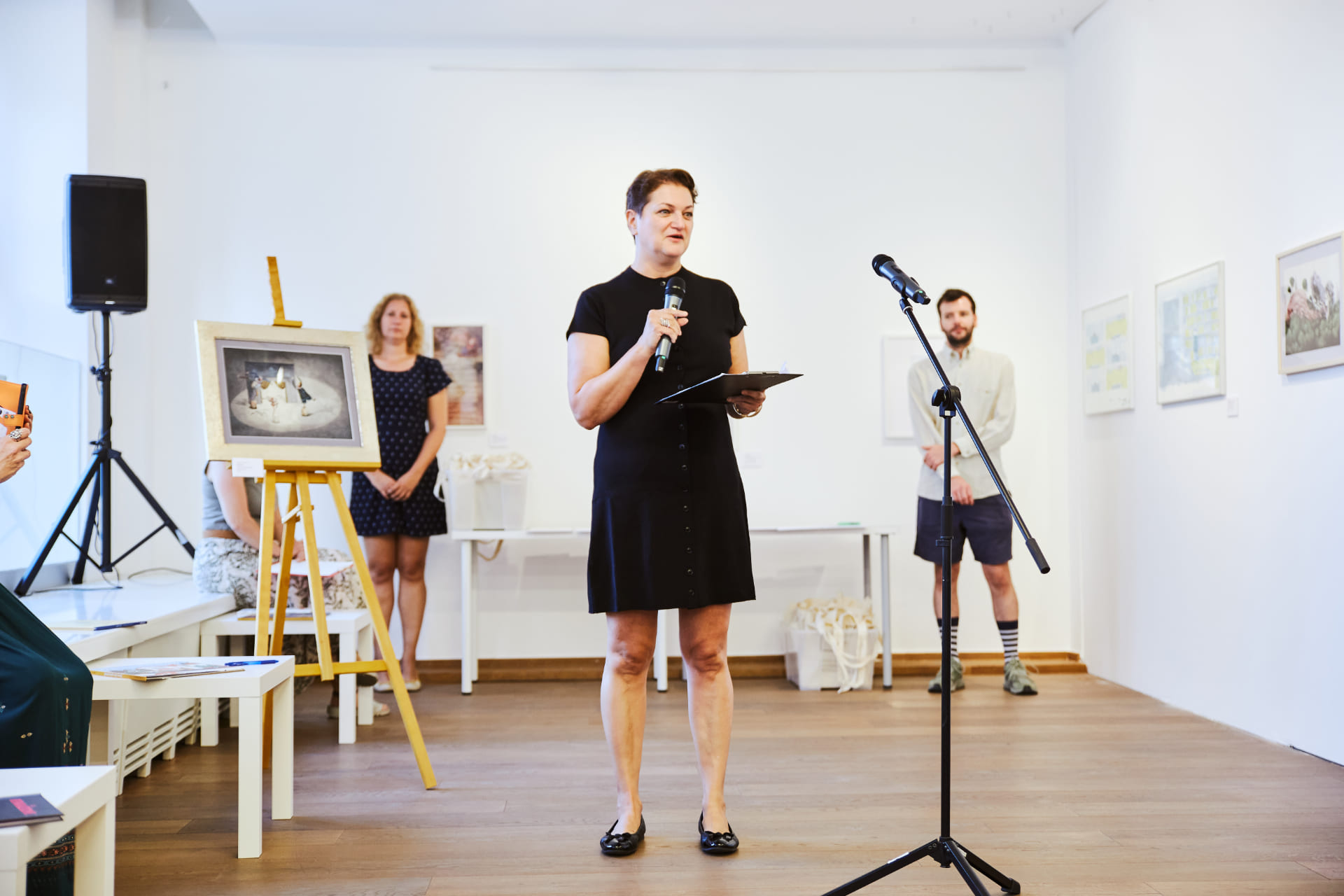
Köszönöm szépen. I am so grateful to be here, in this beautiful city, in this beautiful gallery holding all this meaningful art – the art of silent books

During the last years, I have had the privilege of researching, mediating, reading and teaching silent books in many different settings with many different people. And almost all of the adults I encounter in this work ask the same question: Why are they called silent books? They’re not silent?
I think the reason for this question is our perception of silence as something empty, something lacking. But silence is not lacking, it is filled with meaning and purpose. For most artists, this is obvious: Imagine, for example, music without silence, it would be an unbearable constant noice. But even in our daily lives, silence holds some of the most important moments: It is there when no words are needed, like when you share a comfortable silence with someone you love. It is there when life is so painful or difficult that there are no words that can hold the magnitutde of your feelings. And it is there when the wonders of art or nature makes you speechless, in awe of what you see.

Silence is never empty, it is the space that makes everything else possible: Emotions, connectitons, art and wonder. And in order to understand the power of silent books, we need to understand this power of silence.

Verbal language is our highway to communication, it is fast and often effective. But words also holds the power to separate people, because we speak different languages. When I work with refugees, I am always sad to witness in how many ways people are excluded when they do not know the national language in a country. Where words separate us, silence holds the power to unite us. Because without the words, we need to explore other ways of communicating, most of them much more fit to make true connections.

A book without words shifts the power: The power between the adult and the child, the one who can know the language and the one that does not, and also the power between the author and the reader. As a reader of a book without text you do not have a clear map over the literary landscape you are entering, and therefoere we are equal when meeting a silent books: Explorers of wonderful, foreign worlds.

 Maybe it is because of this that so many silent books deal with themes of dreamlike or unknown worlds, because it is a reflection of how it feels to read one. Réka Korsog, Daniel Szinvai and Mariana Ruiz Johnson has all built wonderful dream worlds in their books, worlds we can loose ourself in, beautiful and surrealistic as only dreams can be. With the silent book “The ball” Timea szaler uses both the beauty and the surrealism to show just how powerful dreams are and how grey our lives would be without them. In all these books, the reader is invited to use their own dreaming experiences to create depths to the readings.

The depht of the reader experience also allows the artist of a silent book to dwelve into the really great questions excistence, klike when Kati Bódi plays the thought of time itself being the protagonis in the wonderful leporello you can see on display here today ,and of time, when Zsusanna Ivans illustrations very cleverly show us how the past and the present might express itself in the memories of an album.

The silence also allows these books to deal the emotions that are too complex to express in words. They create a space where we can see what is unspeakable, and say what is invisible. Staffan Gnosspelius demonstrates this in his very powerful tale of addiction, depression and longing, expressed in innocent pictures of a bear and a hare.

It has been stated that each silent book holds millions of possible stories, but that is simply not true. Even though there is no map, the observant reader of a good silent book wil find the hidden pathways, the helpful hints and clever clues left there for us by the artist, so that we can cocreate these sublte patterns. So we fill in the blanks and make meanings using our own personal experiences, but never without gentle guidance. The language of images belong to everyone, and I thnk it is because of that there is a universality to making these narrative paths that I find very fascinating.

Silent books are less national and more universal than ordinary picturebooks. With picturebooks with text, it is usually possible to identify their origin without looking at the language of the title: For example French picturebooks does, as a group,have a very different vibe than Scandinavian ones. For silent books, this is less true. I study silent books from all over the world, and I find it fascinating how some storytelling techniques, themes and approaches travel across borders.

Take for example Agnes Klemans use of a line in Taming hearts, a line that is like a guideline both to the characters but also to reading the story, or the red string used in the exhitibion poster, from Luca Kuti Kamillas entry to the silent book contest. This particluar technique was first popularized by the legendary Iela Mari in her Il pallochino rosso back in the 1960s, and has travelled throug sweeden in the seventies, through all of europe, to korea, to the americas, to japan… While aritst have always drawn inspiration from one another and made it their own, I do not find it likely that every silent book artist that uses this tecnhqiue knew about all the others. It is more likely that offering the reader a string or thread to gentyly hold on to when entering a silent story simply makes sense.

One silent book theme that is also universal is closely connected to how a silent book is read: Not necessarily linear from the first page to the first, but leafing back and forth, searching for meaning, creating a cycle of understanding. Some of the first modern silent books even reflected this in having a spiral binding. This way of reading is reflected in the theme of different cycles, like Maryann Marays and eva delaserras striking, but very different, visual descriptions of the world’s never-ending cycle of life and death.

When we read or listen to words, we form images in our heads – this is called having an imagination. When I first entered the world of silent books, I was very surprised to find that silent renderings of fairytales and myths are also so common in almost all countries that make silent books. Why would anyone take on the task of competing the images we have had in our heads since childhood by telling the same tales in new images? But my doubts disapperaed when I started studying this catetgory of silent books. When artists like Gabriel Pacheco and Blanka Radnoti reinterpret oral tales – myths and fairy tales- in illustrations, these add to the images we have already imagined, create new depths of meaning and helps us connect our individual inner pictures to those of others, understanding each other a little better.

Once, during a silent book workshop, a very strict teacher of the old school type asked me, a little frstrated: How am I supposed to teach the children anything, when there is no written moral in these books? My answer was that we do not use these books to teach anyone anything, we use them to learn – about each other and about ourselves. When we open the book, we open a space for belonging and connecting, a space that is desperately needed in todays world. Just take a look at Nanni Brunini’s “Discordia” if you need to be reminded just how much.
This is also reflected in many silent books, some of them on display here today: Myriam Barbarszy tells of a disconnected neighboorhodd finding together in beautiful ways, and kinga rofusz explores the feelings of home and belonging in a way that makes you relate no matter where your home is. Very often, connecting and belonging is connected to change, if our lives have gone stale, and in this exhibition, we can se Agnes Korbuly and Csilla Kozhegy desiribe this in very differnet, but equally charming and humoruos ways, using things like pepples, fish  and even the the Italian mafia as catalysts for turning ones life around.

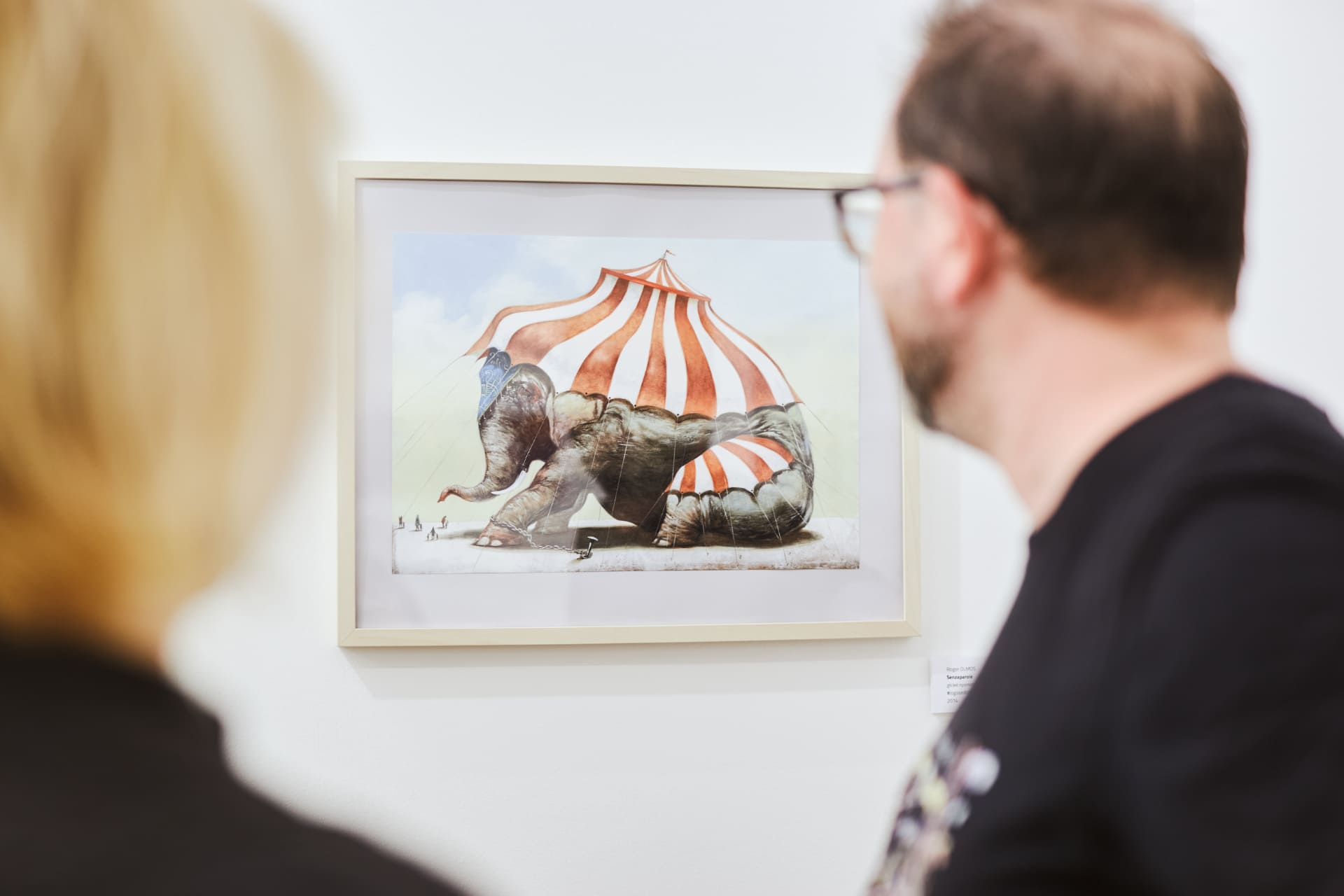
Silent books also allows us to dream of better worlds to belong to. Sofi Saras shows us how a tiny little fish from the deep can bring light and hope in the world, and Lyann Coral illustrates in a moving way how it is possible to refind the joy of life after having lost it. Roger Olmos powerful silent book avocasy for animal welfare would easily feel like apointet finger if expressed in words, but in illustrations, he allows the reader to draw their own conclusions of what world they want.

So, a silent book is a portable opportunitiy, for shifting power, for exploring new ways to tell stories, and for building communities. But this does not happen by simply removing the words from a book. Making a great silent book is a very difficult thing to do. Every illustration has to work on its own, but also in the sequence, so the author has to understand both illustration and storytelling, composition and layout. It also requires a great publisher, like Weeskinders,  with an understanding of the book as an object of art in itself: Paper quality, format, endpapers, everything has to work together in order to make an aristic an d literary space that gives the reader both enouhg support, and enough freedom, to go explore.

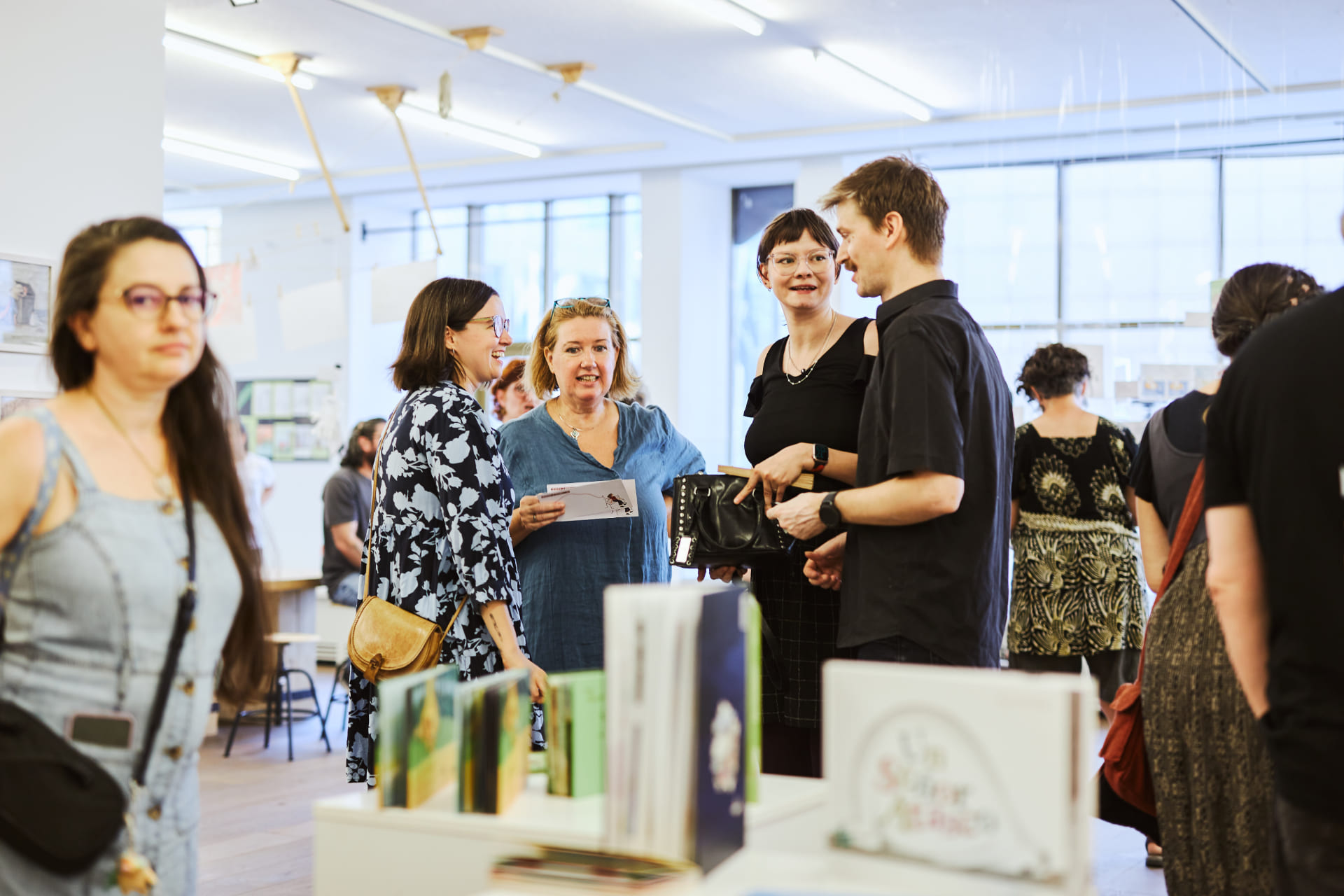
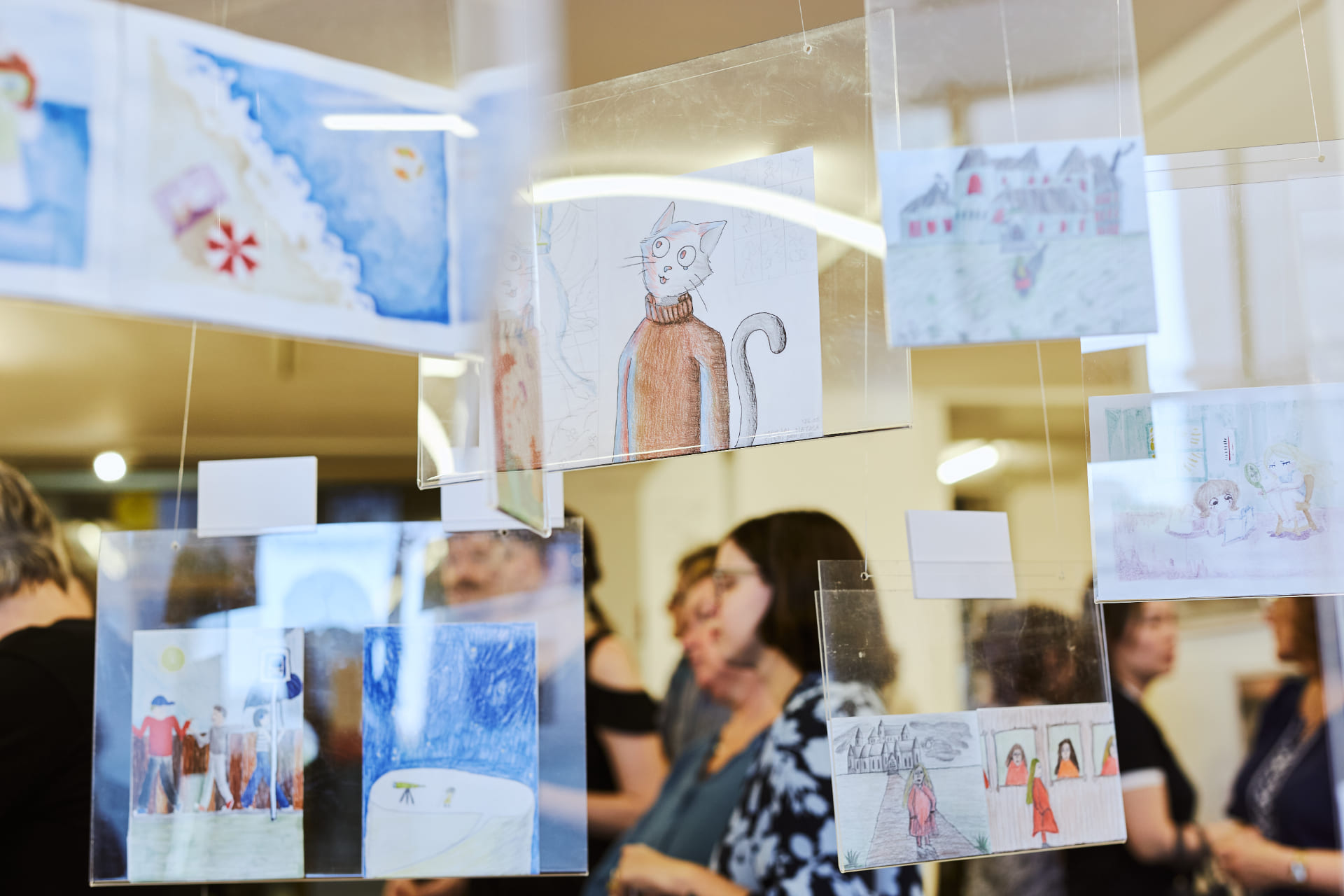
It makes me happy beyond words to stand here and see the illustrations from so many truly great silent books. Not only from the published artists that I have mentioned, I am also very impressed with the shortlisted artists to the competition, established and new, young and old. There quality of the submissions to the contest is very impressive, and I love the fact that there are also so many children that are truly talented artists. This bodes well for the future of the silent book!
With this exhibiton, and the collaboration, you have created a space of possibilities and commujities around silent books that is ruly unique in the world. I come from a country where a silent book is published maybe every third year, so I am very jealous – but also truly happy for you. I hope you treasure this space and use it to help each other grow, and provide the world with great Hungarian silent books.

And if you should drift apart, remember – you can always open a silent book and go on a quest of meaningmaking together, which would help repair andy broken connections.

Partner

#fairytailprojects, Weeskinders Publishing, Zebra Pen EU Kft.